
A cracked tooth often creates sudden discomfort during eating or drinking. Many individuals assume immediate dental treatment is the only solution. Dental visits involve cost, time, and anxiety. A common question appears: can natural methods manage the problem safely?
Natural approaches cannot fully repair a cracked tooth. Natural care can reduce pain, control bacteria, and prevent further damage. Understanding when home care works and when professional treatment becomes necessary helps protect oral health without unnecessary panic.
What Actually Happens When a Tooth Cracks?
When you cut your skin, your body sends blood, nutrients, and living cells to rebuild the tissue. Bone fractures heal through a similar biological process. Teeth? Completely different story. The outer layer of your tooth — the enamel — is the hardest substance in your body, but it’s also completely non-living. No blood flow. No nerve endings and no ability to regenerate once damaged.
The inner layer, dentin, is slightly more alive but still cannot seal a physical crack on its own. Once a crack forms, it won’t close by itself. What natural remedies can do, however, is manage the pain, reduce inflammation, and limit bacteria from entering the vulnerable area while you figure out your next step.
5 Types of Cracked Teeth You Should Know First
Different crack types determine whether natural care is sufficient.
Craze lines
Craze lines are small surface cracks affecting only enamel. These cracks usually cause no pain and require no treatment.
Fractured cusp
A fractured cusp occurs around a dental filling. Pain remains minimal because the pulp is not affected.
Cracked tooth
A cracked tooth extends deeper and may cause pain while chewing. Damage can worsen without intervention.
Split tooth
A split tooth indicates a fully separated crack. Natural care cannot manage this condition.
Vertical root fracture
A vertical root fracture starts below the gum line and spreads upward. Symptoms often appear late, making it dangerous.
When You Don’t Need a Dentist Immediately
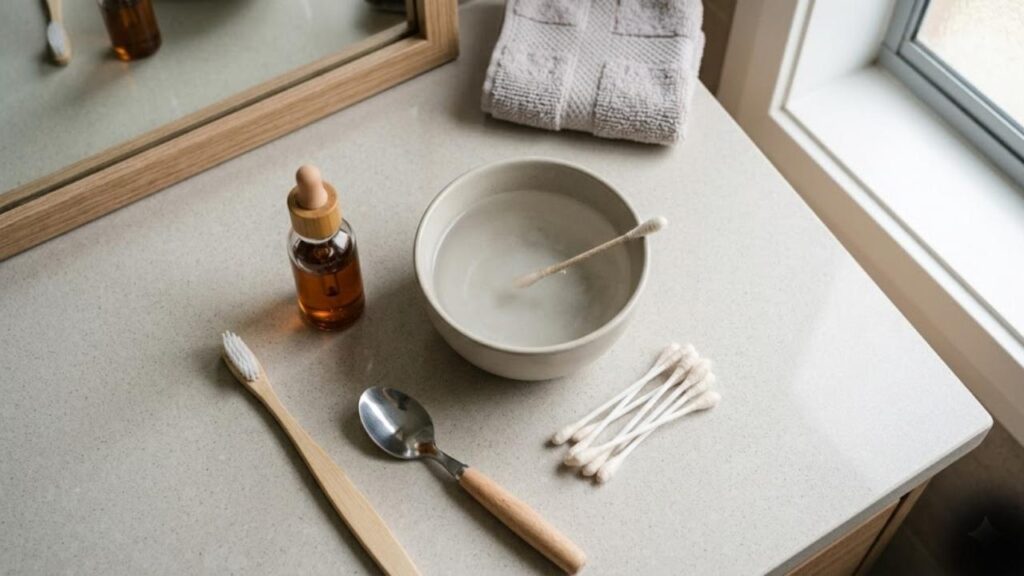
Certain conditions allow temporary home management without urgent dental intervention.
- No pain during chewing
- No swelling or gum inflammation
- No bleeding from the affected area
- Minor surface crack only
- No sensitivity to hot or cold foods
These signs indicate a lower-risk condition. Monitoring symptoms daily remains essential.
7 Natural Ways to Manage a Cracked Tooth at Home
Natural care focuses on pain control and protection. These methods support short-term management.
Saltwater rinse to prevent infection
Saltwater reduces bacteria and inflammation. Mix half a teaspoon of salt in warm water and rinse twice daily.
Clove oil for instant pain relief
Clove oil contains eugenol, a natural anesthetic. Apply a small amount using cotton to numb the affected area.
Cold compress to reduce swelling
A cold compress applied externally decreases inflammation and pain intensity.
Avoid hard foods and pressure
Hard foods increase crack severity. Choose soft foods such as yogurt, rice, and mashed vegetables.
Use temporary dental wax
Dental wax creates a protective barrier over sharp edges. This prevents irritation to the tongue and cheeks.
Maintain oral hygiene strictly
Brushing twice daily with a soft-bristle toothbrush reduces bacterial buildup around the crack.
Stay hydrated and avoid sugar
Water reduces acidity in the mouth. Sugary foods increase bacterial growth and worsen sensitivity.
What Natural Remedies Cannot Do
Natural methods support symptom management but cannot repair structural damage.
- Natural remedies cannot regenerate enamel
- Natural care cannot seal deep cracks
- Natural methods cannot eliminate internal infection
Scientific evidence confirms enamel lacks regenerative cells. According to the Mayo Clinic, dental intervention becomes necessary for structural repair.
Signs Your Cracked Tooth Is Getting Worse
Recognizing progression helps prevent severe complications.
- Sharp pain during chewing
- Increased sensitivity to temperature
- Swelling around gums
- Tooth discoloration
- Intermittent pain that becomes constant
These symptoms indicate deeper structural damage.
How to Fix a Cracked Tooth Naturally — What Actually Works
Let’s be honest: no home remedy will seal the crack or heal the tooth. That’s physically impossible. But knowing how to fix a cracked tooth naturally in a temporary, safe way can absolutely reduce your pain, prevent bacterial infection, and protect the tooth until you get professional care.
1. Saltwater Rinse — Your First Line of Defense
Mix 1 teaspoon of salt in a glass of warm water. Swish gently for 30 seconds and spit. Repeat 3 times daily. Salt is naturally antibacterial and helps reduce inflammation around the cracked area. It’s simple, free, and genuinely effective for keeping infection at bay while you wait to see a dentist.
2. Clove Oil — Nature’s Numbing Agent
Apply 2–3 drops of clove oil onto a cotton ball and dab it gently onto the affected tooth and surrounding gum. The eugenol compound in clove oil acts as a natural analgesic — it numbs the area and reduces discomfort quickly. It also has antiseptic properties that help protect the cracked tooth from bacterial buildup.
3. Cold Compress — Swelling’s Worst Enemy
Wrap ice in a clean cloth and hold it against the outside of your cheek near the affected tooth. Do this for 15 minutes on and 15 minutes off. This helps reduce swelling and numbs the area from the outside. Never apply ice directly to the tooth — thermal shock can worsen the sensitivity and pain.
4. Turmeric Paste — The Anti-Inflammatory Secret
Mix half a teaspoon of turmeric powder with a few drops of coconut oil to form a paste. Apply it gently to the cracked tooth and surrounding gum using a cotton swab. Curcumin — the active compound in turmeric — is both anti-inflammatory and antibacterial, making it one of the more underrated natural remedies for cracked tooth pain relief.
5. Peppermint Tea Bag — Underrated Relief
Brew a peppermint tea bag, let it cool to warm (not hot), and press it gently against the sore area for a few minutes. The menthol in peppermint provides mild numbing relief and has natural antibacterial properties. It’s a surprisingly soothing herbal toothache remedy that most people overlook.
6. Hydrogen Peroxide Rinse — Kill the Bacteria
Dilute hydrogen peroxide (3%) with equal parts water — a 50/50 mix. Swish gently around your mouth for 30 seconds and spit. Do not swallow. This oral antiseptic rinse kills bacteria around the crack and helps reduce inflammation. Use once or twice daily, not more.
According to the American Dental Association, keeping the area clean and bacteria-free is one of the most important steps in preventing a minor crack from developing into a serious infection.
When You Must See a Dentist Immediately

Certain conditions require immediate professional care.
- Severe or persistent pain
- Visible tooth separation
- Signs of infection such as pus or fever
- Bleeding that does not stop
- Difficulty chewing or biting
According to WebMD, untreated cracks may lead to infection or tooth loss.
Daily Routine to Protect a Cracked Tooth Naturally
A structured routine helps maintain stability and reduce risk.
Morning routine
Brush gently using a soft toothbrush. Rinse with saltwater to control bacteria.
Daytime care
Consume soft foods and avoid chewing on the affected side. Drink water frequently.
Night routine
Clean the mouth thoroughly and apply clove oil if pain persists.
Consistency in routine reduces complications.
Natural vs Professional Treatment Comparison
The following table compares natural care and professional treatment:
| Aspect | Natural Care | Dental Treatment |
|---|---|---|
| Pain Relief | Temporary | Long-lasting |
| Crack Repair | Not possible | Possible |
| Cost | Low | High |
| Infection Control | Limited | Effective |
| Long-Term Outcome | Unstable | Stable |
Natural care provides temporary support. Professional treatment ensures long-term stability.
Common Mistakes That Make a Cracked Tooth Worse
Avoiding harmful habits prevents further damage.
- Chewing hard foods such as nuts or ice
- Ignoring mild discomfort
- Consuming extremely hot or cold drinks
- Skipping oral hygiene practices
- Applying pressure on one side of the mouth
According to Healthline, improper habits increase the risk of worsening cracks.
5 Things You Must Stop Doing Right Now
While applying home remedies, most people accidentally make the crack worse. These are the most common cracked tooth care mistakes dentists see:
- Chewing on the cracked side — every bite applies pressure that can deepen the fracture further
- Drinking very hot or very cold liquids — thermal changes aggravate exposed dentin and spike pain
- Repeatedly pressing on the tooth with your tongue or finger — it feels natural but increases micro-movement in the crack
- Hoping the pain will just go away — it might ease temporarily, but the crack is still there and slowly spreading
- Placing aspirin directly on the gum — this is an old myth that causes chemical burns on soft tissue, not pain relief
The Honest Truth — When Home Remedies Are NOT Enough
Red flag symptoms that mean: go NOW
There is a clear line between a manageable minor crack and a dental emergency. Cross it, and natural remedies won’t just fail — they can allow a serious infection to worsen while you delay care. Watch for these warning signs:
- Severe, throbbing pain that won’t subside with any home remedy
- A visible crack extending below the gumline
- Swollen jaw, swollen face, or a noticeable bump on the gum (possible dental abscess)
- Fever alongside dental pain — this signals a spreading infection
- The tooth feels loose or shifts when you touch it
- Intense pain specifically when you release bite pressure — a classic sign of a deep crack
Any of the above symptoms means skip the home remedies entirely. Head to a dentist or emergency dental clinic the same day. A dental abscess left untreated can spread to the jaw, neck, and in rare cases become a life-threatening condition.
For more information on recognizing a dental abscess and knowing when it becomes an emergency, visit the Mayo Clinic’s detailed guide.
Temporary Protection Until You See a Dentist
While you’re in the window between cracking the tooth and your dental appointment, protecting the area is just as important as managing pain. Here is what actually helps:
- Use dental wax (available at any pharmacy for a few dollars) to cover sharp edges and prevent the crack from cutting your tongue or cheek
- Switch to a soft food diet immediately: yogurt, mashed potatoes, soups, smoothies, and soft-cooked eggs
- Strictly avoid: ice, hard candy, nuts, popcorn kernels, raw carrots, crusty bread, or anything requiring strong bite force
- Chew exclusively on the opposite side of your mouth until you’ve been seen by a dentist
Can You Remineralize a Cracked Tooth? The Truth
You’ve probably seen articles claiming that a calcium-rich diet or remineralizing toothpaste can heal a cracked tooth. This is one of the most misunderstood topics in home dental care — and it needs to be cleared up.
Remineralization is a real and well-documented process where minerals like calcium and phosphate help strengthen weakened or eroded enamel. It works well for early-stage enamel erosion or very superficial demineralization. But it absolutely cannot seal a physical crack in the tooth structure. A crack is a mechanical fracture — no mineral can bridge that gap from the inside out.
That said, supporting enamel health is always a smart long-term habit. A diet rich in leafy greens, dairy products, and vitamin D — combined with fluoride or mineral-rich toothpaste — helps keep your remaining tooth structure as strong as possible. It just won’t fix the crack itself.
For a detailed breakdown of foods and habits that strengthen tooth enamel naturally, Healthline has a solid, evidence-based guide.
Frequently Asked Questions
Can a cracked tooth heal itself naturally?
No. Tooth enamel is non-living tissue and has zero ability to regenerate. Natural remedies for a cracked tooth manage pain and prevent infection temporarily — they do not repair or close the fracture in any way.
How long can I wait before seeing a dentist for a cracked tooth?
For very minor craze lines with no pain: up to 2 days with proper home care is reasonable. For any crack causing pain, sensitivity, or visible damage: call your dentist the same day or first thing the next morning — do not push it further than that.
Does clove oil actually fix a cracked tooth?
No. Clove oil contains eugenol, a natural numbing compound that temporarily reduces pain. It does not repair or seal the crack in any way. Think of it as a short-term painkiller, not a cure.
Is a cracked tooth a dental emergency?
It depends entirely on the type. Surface craze lines are urgent but not an emergency. A split tooth, vertical root fracture, or any crack accompanied by signs of infection is a same-day dental emergency without question.
What happens if you leave a cracked tooth untreated?
The crack deepens with every bite. Eventually bacteria reach the inner tooth pulp, causing infection and abscess. Left long enough, you risk losing the entire tooth. A crack that costs a small amount to bond today could cost significantly more to treat if ignored for several months.
Final Thoughts
Your cracked tooth doesn’t always need an emergency dentist visit — but it does always need your attention. For minor craze lines and small surface fractures, knowing how to fix a cracked tooth naturally with saltwater rinses, clove oil, cold compresses, and dental wax can buy you safe, pain-managed time. But never let buying time turn into ignoring the problem.
A crack that is manageable today becomes a nightmare next month. When in doubt — book that appointment. Your future self will be grateful you didn’t gamble with your smile.