
Egg noodles look simple, but their nutritional profile tells a more complex story. If you often eat them without thinking twice, understanding egg noodles nutrition facts can change how you plan meals, manage calories, and balance macros. This guide answers the real questions people ask before adding egg noodles to their diet.
What Are Egg Noodles Made Of?
Egg noodles contain flour, eggs, and water. Manufacturers often use refined wheat flour, which lowers fiber but improves texture.
Key Ingredients and Their Roles
- Wheat flour provides carbohydrates and structure
- Eggs add protein, fat, and micronutrients
- Salt improves flavor and shelf life
Fresh egg noodles contain more moisture, while dried versions last longer but may lose some nutrients during processing.
Next, you’ll see how these ingredients translate into actual nutrition values.
What Are Egg Noodles Nutrition Facts Per Serving?
Egg noodles provide high carbohydrates, moderate protein, and low fiber. A typical cooked 1-cup serving (about 160g) contains:
| Nutrient | Amount |
|---|---|
| Calories | 220 kcal |
| Carbohydrates | 40 g |
| Protein | 7 g |
| Fat | 3 g |
| Fiber | 2 g |
| Sodium | 8 mg |
These egg noodles nutrition facts show they are energy-dense but not very filling due to low fiber.
Now, let’s break down the calorie impact more clearly.
Are Egg Noodles High in Calories?
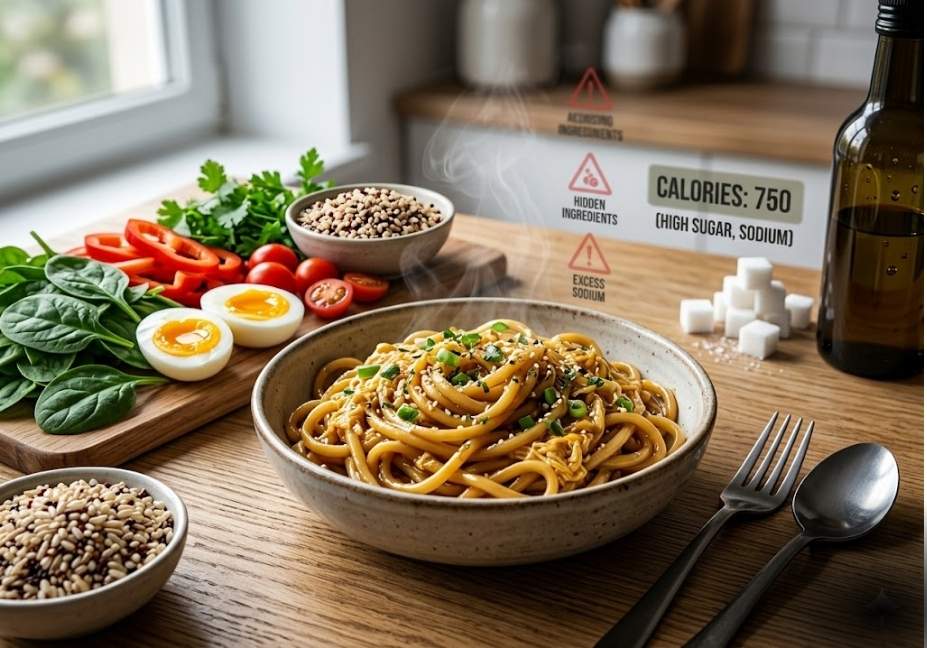
Egg noodles contain moderate calories but become high-calorie with sauces. Plain servings stay reasonable, but additions like butter or creamy sauces double calorie intake.
Example Comparison
- Plain egg noodles: 220 kcal
- With butter and cheese: 400–500 kcal
- With creamy Alfredo sauce: 600+ kcal
The surprising part in egg noodles nutrition facts is not the noodles themselves, but how easily calories increase with toppings.
Next, we’ll examine their macronutrient balance.
Do Egg Noodles Provide Enough Protein?
Egg noodles provide moderate protein but not enough alone for muscle support. Eggs increase protein content compared to regular pasta, but levels remain limited.
Protein Comparison
- Egg noodles: 7g per cup
- Chicken breast: 31g per 100g
- Lentils: 18g per cup
Egg noodles nutrition facts show they can support protein intake when combined with meat, tofu, or legumes.
Now let’s look at carbohydrates and their impact.
Are Egg Noodles High in Carbohydrates?
Egg noodles contain high refined carbohydrates that affect blood sugar. One serving delivers around 40 grams of carbs.
What This Means
- Rapid digestion increases glucose levels
- Low fiber reduces satiety
- Frequent intake may impact weight control
According to the Harvard T.H. Chan School of Public Health, refined carbs digest quickly and may lead to energy crashes.
This aspect of egg noodles nutrition facts often surprises people trying to manage energy levels.
Next, we explore fats and cholesterol.
Do Egg Noodles Contain Cholesterol?
Egg noodles contain cholesterol due to egg content. A typical serving includes about 30–40 mg cholesterol.
Important Insights
- Cholesterol levels depend on egg quantity
- Most healthy individuals tolerate moderate intake
- Balance matters more than elimination
The egg noodles nutrition facts highlight cholesterol as a concern mainly for people with heart conditions.
Next, we’ll analyze vitamins and minerals.
What Vitamins and Minerals Do Egg Noodles Provide?
Egg noodles provide small amounts of B vitamins and iron. Enriched versions may contain added nutrients.
Key Micronutrients
- Iron supports oxygen transport
- Folate supports cell growth
- Riboflavin supports energy metabolism
The USDA FoodData Central confirms that enriched pasta products often restore lost nutrients.
Still, egg noodles nutrition facts show they are not nutrient-dense compared to whole grains.
Let’s see how they compare to other pasta types.
Egg Noodles vs Regular Pasta: Which Is Healthier?
Egg noodles contain more protein and fat than regular pasta. Regular pasta usually contains only flour and water.
Comparison Table
| Feature | Egg Noodles | Regular Pasta |
|---|---|---|
| Protein | Higher | Lower |
| Fat | Slightly higher | Lower |
| Cholesterol | Present | None |
| Texture | Softer | Firmer |
Egg noodles nutrition facts show a slight nutritional advantage, but not enough to label them “healthier.”
Next, we’ll address weight loss concerns.
Are Egg Noodles Good for Weight Loss?
Egg noodles can fit weight loss diets if portion-controlled. Overeating refined carbs leads to calorie surplus.
Practical Tips
- Limit serving size to 1 cup
- Add vegetables for fiber
- Pair with lean protein
The CDC recommends balancing calorie intake with nutrient-dense foods.
Egg noodles nutrition facts reveal that portion control matters more than elimination.
Now let’s discuss digestion and gut health.
Do Egg Noodles Support Digestive Health?
Egg noodles provide low fiber, which limits digestive benefits. Whole grain alternatives support gut health better.
Key Facts
- Low fiber slows digestion efficiency
- Minimal prebiotic effect
- Better options include whole wheat noodles
Egg noodles nutrition facts highlight a major drawback: they lack fiber needed for optimal digestion.
Next, we explore gluten content.
Are Egg Noodles Gluten-Free?
Egg noodles contain gluten because they use wheat flour. They are not suitable for gluten intolerance or celiac disease.
Alternatives
- Rice noodles
- Chickpea pasta
- Lentil-based noodles
Egg noodles nutrition facts clearly indicate gluten presence, making label checking essential for sensitive individuals.
Now let’s uncover hidden downsides.
What Are the Hidden Downsides of Egg Noodles?
Egg noodles hide risks when consumed frequently in large portions.
Key Concerns
- High glycemic index spikes blood sugar
- Low fiber reduces satiety
- Easy overconsumption increases calories
These elements in egg noodles nutrition facts explain why they may contribute to weight gain when eaten without balance.
Next, let’s see how to make them healthier.
How Can You Make Egg Noodles Healthier?
You can improve egg noodles by adding fiber, protein, and healthy fats.
Smart Upgrades
- Add vegetables like spinach and broccoli
- Include lean proteins such as chicken or tofu
- Use olive oil instead of butter
Egg noodles nutrition facts become more balanced when meals include diverse nutrients.
Now, let’s answer quick common questions.
Quick FAQs About Egg Noodles Nutrition Facts
Are egg noodles healthier than rice?
Egg noodles contain more protein but fewer micronutrients than whole grain rice.
Can diabetics eat egg noodles?
Yes, but portion control and pairing with fiber-rich foods is essential.
Do egg noodles cause weight gain?
They cause weight gain only when consumed in excess calories.
Are egg noodles processed food?
Yes, most commercial egg noodles use refined flour and processing.
Final Thoughts on Egg Noodles Nutrition Facts
Egg noodles provide quick energy, moderate protein, and familiar taste, but they lack fiber and micronutrient density. Understanding egg noodles nutrition facts helps you control portions, balance meals, and avoid hidden calorie traps. Smart pairing transforms them from a basic carb into a balanced meal.