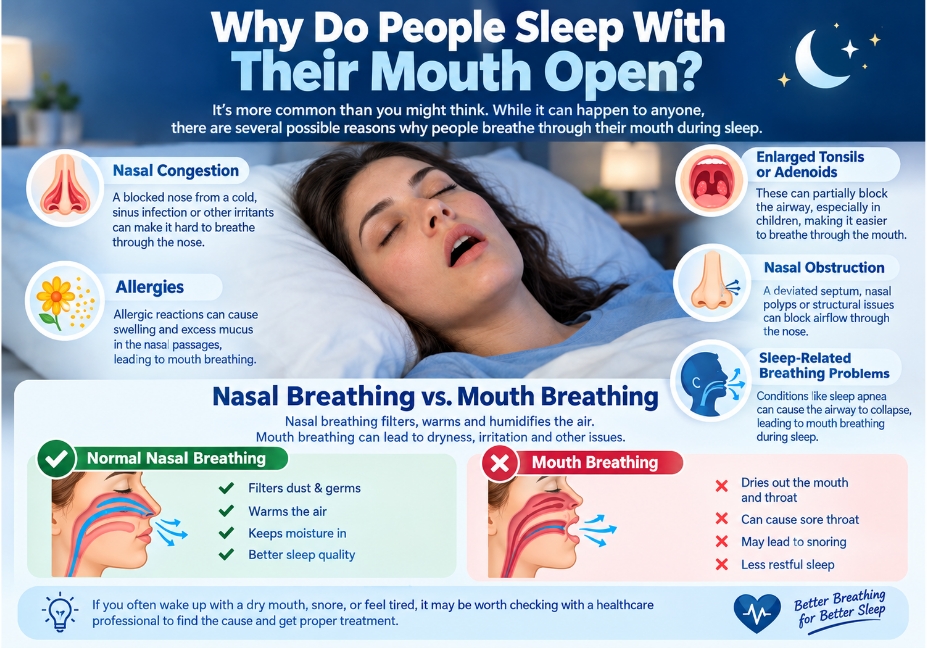
Why do people sleep with their mouth open waking up with a dry, cottony mouth, or catching a glimpse of yourself (or a partner) sleeping jaw-slack and open-mouthed, is one of those small mysteries of sleep. It’s common enough to seem harmless, but it’s usually a visible sign of something specific: mouth breathing. Your nose is built to be your primary airway during sleep — it filters, warms, and humidifies the air you breathe — so when the mouth takes over instead, it’s often because the nose isn’t able to do its job properly. Here’s what typically causes it and when it’s worth addressing.
The Nose’s Job — and Why It Sometimes Gets Skipped
Nasal breathing does more than move air. It filters out dust and particles, warms and humidifies incoming air, and helps the body absorb oxygen more efficiently by triggering the release of nitric oxide, a compound that widens blood vessels. Mouth breathing skips all of that. When your body can’t move enough air through your nose, it defaults to the mouth as backup — and if that becomes a nightly pattern, your jaw simply relaxes open as you fall asleep.
Common Causes of Sleeping With Your Mouth Open
- Nasal congestion. This is the single most common cause. Colds, allergies, or chronic sinus issues can physically block or narrow the nasal passages, forcing the mouth to compensate.
- Structural issues. A deviated septum, enlarged tonsils or adenoids, or nasal polyps can physically restrict airflow through the nose, regardless of how clear you otherwise feel.
- Sleep position. Sleeping on your back can let the tongue fall backward toward the throat, partially blocking the airway and making the mouth more likely to fall open. Side sleeping tends to keep the airway better aligned.
- Simple habit. For some people, mouth breathing during sleep isn’t linked to any underlying blockage — it’s just a pattern the body has settled into over time, sometimes carried over from childhood.
- Obstructive sleep apnea (OSA). In more serious cases, the throat muscles relax and partially or fully block the airway during sleep, and the body opens the mouth in an effort to pull in more air.
Did you know? As you fall asleep, your facial muscles gradually relax — which is part of why the mouth tends to drift open more easily the deeper you sleep, even in people without any underlying breathing issue.
Is It Ever a Sign of Something More Serious?
Occasional mouth breathing — during a cold, an allergy flare-up, or a particularly deep sleep — isn’t typically a concern. It’s worth paying closer attention if mouth breathing is a regular, nightly pattern, especially alongside:
- Loud or frequent snoring
- Gasping, choking, or pauses in breathing during sleep (often noticed by a partner)
- Excessive daytime fatigue despite a full night’s sleep
- Waking up with a dry mouth, sore throat, or headache
- Difficulty concentrating during the day
This combination of symptoms is one of the more common signs of obstructive sleep apnea, a condition where breathing repeatedly stops and starts throughout the night. It’s worth knowing that sleep apnea isn’t only a concern for people who are overweight — a narrow airway or naturally relaxed throat muscles can cause it in anyone.
Why Do People Sleep With Their Mouth Open?
Expert note: Sleep specialists note that snoring alone doesn’t necessarily mean sleep apnea, but nearly everyone with sleep apnea does snore — so persistent, loud snoring combined with any of the symptoms above is a reasonable prompt to talk to a doctor about a sleep study.
Why Chronic Mouth Breathing Is Worth Addressing
Beyond the immediate discomfort of a dry mouth, regularly breathing through your mouth at night can add up over time:
- Reduced saliva dries out the mouth, which can increase the risk of cavities, gum irritation, and bad breath, since saliva normally helps protect teeth overnight.
- Disrupted sleep quality, since chronic mouth breathing can itself narrow the airway further and worsen underlying sleep-disordered breathing.
- In children specifically, long-term mouth breathing during key developmental years has been linked to changes in facial and jaw growth, including a narrower palate and dental crowding, since the position of the tongue and facial muscles during breathing plays a role in how the face and jaw develop.
What Can Help
- Treat the underlying cause first. If allergies or congestion are behind it, addressing those — through allergy treatment, a humidifier, or nasal rinses — often resolves mouth breathing on its own.
- Adjust your sleep position. Side sleeping can reduce the chance of the tongue falling back and blocking the airway compared to sleeping flat on your back.
- Get evaluated for structural issues. A deviated septum, chronic sinus blockage, or enlarged tonsils may need treatment from an ENT specialist.
- Ask about a sleep study if you suspect sleep apnea. This is the only reliable way to diagnose OSA, and it opens the door to effective treatments like CPAP therapy or oral appliances.
- Be cautious with mouth taping. Some people try taping the mouth shut at night to force nasal breathing, but sleep experts caution that there’s limited evidence this is effective, and it can be genuinely unsafe for anyone with an underlying breathing obstruction — talk to a doctor before trying it.
Pro tip: A visible symptom like a dry mouth or morning headache isn’t proof of mouth breathing on its own — the only way to know for certain what’s happening while you sleep is a sleep study or an observant partner, so don’t self-diagnose sleep apnea from symptoms alone.
Frequently Asked Questions
Is it bad to sleep with your mouth open?
Occasional mouth breathing usually isn’t harmful, but a regular pattern can lead to dry mouth, increased cavity risk, and disrupted sleep quality, and may point to an underlying nasal or breathing issue worth addressing.
What’s the most common reason people sleep with their mouth open?
Nasal congestion — from colds, allergies, or chronic sinus issues — is the most frequent cause, since it physically limits how much air can move through the nose.
Can sleeping with your mouth open be a sign of sleep apnea?
Yes, particularly if it’s paired with loud snoring, gasping or breathing pauses, and excessive daytime tiredness. A sleep study is the way to get a definitive diagnosis.
Does sleeping position affect mouth breathing?
Yes. Sleeping on your back can let the tongue fall backward and partially block the airway, making mouth breathing more likely. Side sleeping tends to keep the airway better aligned.
Should I try mouth taping to stop mouth breathing?
Sleep experts generally advise caution. There isn’t strong evidence that it works, and it can be risky if an underlying breathing obstruction hasn’t been ruled out. Talk to a doctor before trying it.
The Bottom Line
Sleeping with your mouth open is common and usually traces back to something your nose can’t quite handle on its own — congestion, structural narrowing, or simply the natural relaxation of your jaw as you fall into deeper sleep. Most cases are harmless, but persistent mouth breathing paired with snoring, gasping, or daytime fatigue is worth a conversation with a doctor, since it can be one of the more visible clues pointing toward sleep apnea.
This article is for informational purposes only and does not substitute for professional medical advice. If you have concerns about sleep apnea or chronic mouth breathing, consult your doctor.