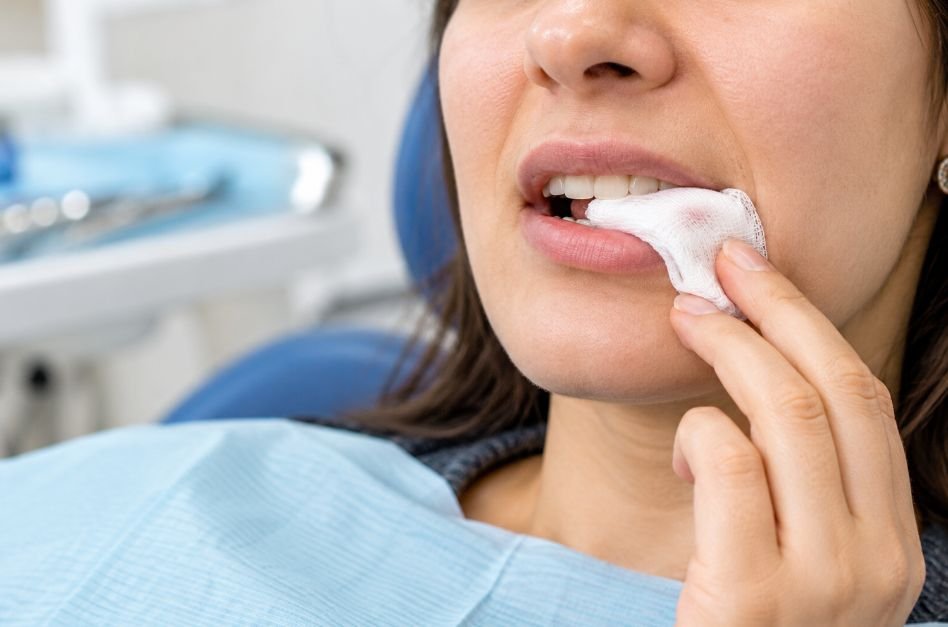
If you just had a tooth pulled, you’re probably staring at a wad of gauze wondering exactly how long you’re supposed to keep biting down on it. It’s a fair question — bite too briefly, and you risk prolonged bleeding; hold onto old, saturated gauze too long, and you’re just creating a soggy breeding ground for bacteria. The short answer is 30 to 45 minutes for the first piece, with the overall process winding down within a few hours. Here’s the full breakdown, along with what’s normal, what’s not, and when to actually call your dentist.
What the Gauze Is Actually Doing
Immediately after an extraction, your dentist packs gauze over the empty socket and asks you to bite down firmly. That pressure does two things: it slows bleeding, and it gives a blood clot time to form undisturbed. That clot isn’t just a byproduct of healing — it’s the protective seal over the bone and nerve endings underneath, and losing it too early is the single biggest cause of painful complications.
Did You Know? A dislodged or missing blood clot is what leads to dry socket (alveolar osteitis)—the most common complication after a tooth extraction, and one that’s almost entirely preventable with the right aftercare in the first 24 hours.
The Standard Timeline: How Long to Bite Down After Extraction
Here’s what a typical recovery timeline looks like, based on standard dental post-op protocols:
| Time After Extraction | What to Do |
|---|---|
| 0–45 minutes | Bite firmly on the gauze provided by your dentist; avoid chewing or talking. |
| 45 min–1 hour | Remove gently; replace with fresh gauze only if still bleeding. |
| 1–4 hours | Oozing is normal; most active bleeding slows significantly. |
| 4–24 hours | Gauze is typically no longer needed unless bleeding restarts. |
| 24+ hours | Mild pinkish saliva can persist, but true bleeding should have stopped |
Pro Tip: Keep the gauze pad damp and folded into a thick pad directly over the socket — a dry, thin wad won’t apply even pressure and tends to stick painfully to the clot when removed.
Per the American Dental Association’s patient guidance, gauze should generally stay in place for 30 to 45 minutes immediately after the procedure before being checked. If bleeding continues beyond that, a fresh piece of gauze — folded and re-positioned directly over the socket — is used for another 30 to 45 minutes.
How Often to Change the Gauze (and When to Stop)
Most people only need to replace the gauze once or twice total. A common mistake is the opposite problem — changing it every few minutes “just to check”, which actually disrupts clot formation each time the pad is lifted.
A simple rule of thumb:
- Replace gauze if it’s fully soaked through with blood
- Leave it alone (don’t peek) for the full 30–45 minute window each time
- Stop using gauze once bleeding has reduced to light oozing or a pinkish tinge in saliva — this usually happens within 2–4 hours.
Signs You’re Bleeding Too Much
Some blood-tinged saliva for the rest of the day is completely normal. What’s not normal is bleeding that hasn’t meaningfully slowed after several hours or blood that’s bright red and flowing rather than oozing.
Doctor’s Note: If you’re soaking through a fresh piece of gauze every 30 minutes for more than 3–4 hours, or the bleeding seems to be getting heavier rather than lighter, contact your dentist or oral surgeon rather than continuing to wait it out at home.
What Happens If You Remove the Gauze Too Soon
Pulling the gauze out before a stable clot has formed can restart bleeding and, more importantly, risks disturbing the clot itself before it’s had time to anchor. If this happens:
- Rinse your mouth gently with cool water (don’t spit forcefully)
- Fold a fresh piece of clean gauze into a firm pad
- Bite down directly over the socket for another 30–45 minutes
- Stay upright and avoid talking or chewing during that window
Avoiding Dry Socket: What Not to Do in the First 24 Hours
This is where most preventable complications happen — not because people remove the gauze wrong, but because of what they do in the hours after. According to risk factors for dry socket outlined by MedlinePlus, drinking through a straw, smoking, vigorous rinsing or spitting, and generally anything that creates suction or disturbs the clot all raise your risk.
For the first 24 hours, avoid:
- Drinking through a straw
- Smoking or vaping
- Spitting forcefully or rinsing vigorously
- Hot drinks or hard, crunchy foods
- Strenuous exercise
Frequently Asked Questions
How long should I bite on gauze after a tooth extraction?
Generally 30 to 45 minutes for the first piece, with a second piece for the same duration if bleeding continues.
How often should I change the gauze?
Usually only once or twice — replace it only when it’s fully soaked through, not on a fixed schedule.
Is it normal to still have some bleeding after a few hours?
Yes, light oozing or pink-tinged saliva for several hours is normal; heavy, bright-red bleeding that isn’t slowing down is not.
How do I know if I have a dry socket?
Per Harvard Health Publishing, dry socket symptoms typically appear one to three days later, often as pain radiating from the socket to the ear, eye, or jaw — a sharp change from gradually improving discomfort.
What if I forgot and left the gauze in for several hours?
It’s not dangerous, just less comfortable — remove it gently once bleeding has clearly stopped and avoid replacing it unless bleeding resumes.
Medical Disclaimer: This article is for informational purposes only and does not substitute professional medical or dental advice. Always follow the specific aftercare instructions given by your own dentist or oral surgeon, and contact them directly with any concerns about bleeding, pain, or signs of dry socket.
The Bottom Line
The gauze itself only needs to stay in for 30 to 45 minutes at a time, with most people done with it entirely within a few hours. The part that actually prevents complications is what happens afterward — protecting that blood clot for the full 24 hours by skipping straws, smoking, and vigorous rinsing. When in doubt, your dentist’s specific instructions always take priority over any general timeline.