Waking up to a damp pillow isn’t anyone’s favourite way to start the day, and if it happens often, you’ve probably asked yourself, ‘Why do I drool in my sleep?’ The short answer is that it’s an extremely common and usually harmless side effect of how your body handles saliva once you fall asleep. Your mouth produces excess saliva escaping the mouth around the clock, but the muscles that normally keep it in check relax significantly during deep sleep.
For most people, nighttime drooling is simply a matter of gravity, sleep position, and a slower swallow reflex. But in a smaller number of cases, it can be an early clue pointing to nasal congestion, acid reflux, or even sleep apnoea. Below, we’ll walk through the physiology behind sleep drooling, the most common triggers, and the specific warning signs that mean it’s worth mentioning to a doctor.
What Is Sleep Drooling?
Sleep drooling, also called nocturnal sialorrhea, is the involuntary leakage of saliva from the mouth while you’re asleep. Saliva is produced continuously by the salivary glands to keep the mouth and throat lubricated, and under normal waking conditions, you swallow it automatically, often without noticing. During sleep, swallowing becomes far less frequent, and if saliva builds up faster than it’s cleared, it can escape through slightly parted lips.
Why Do I Drool in My Sleep? The Science Behind It
During deep sleep, the muscles of your face, jaw, and throat relax substantially, and the automatic swallow reflex that keeps saliva moving during the day slows way down. According to a detailed review of sialorrhoea physiology, drooling generally results from either an increase in saliva production that outpaces swallowing or from reduced muscle control over keeping the mouth closed and saliva contained — both of which are more likely once you’re fully asleep.
Why Do I Drool in My Sleep?
Saliva production itself doesn’t stop at night, but it does continue at a steady low level to protect the mouth and throat while you rest. Combine that ongoing production with fewer swallows and a mouth that’s more likely to fall open, and the result is the classic wet spot on the pillow.
| Did You Know? The average person produces roughly one to two litres of saliva a day — and only a small fraction of that ever needs to escape for you to notice a damp pillow. |
Common Causes of Drooling During Sleep
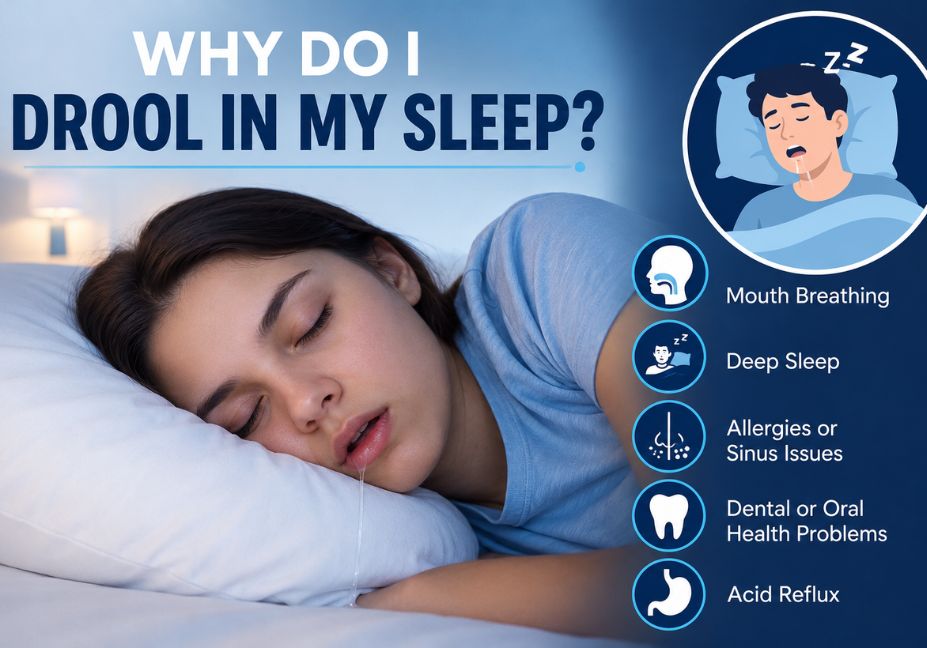
Nighttime drooling usually comes down to a combination of these factors:
- Sleep position — side and stomach sleepers are far more prone to drooling than back sleepers.
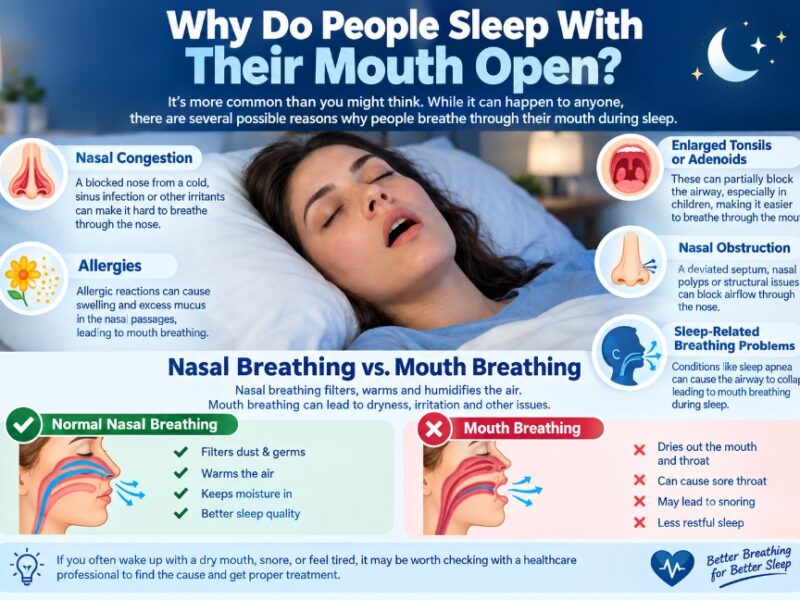
- Mouth breathing — nasal congestion from a cold, sinus infection, or allergies forces air (and saliva) out through an open mouth.
- GERD — acid reflux can trigger extra saliva production as the body tries to protect the oesophagus.
- Medication side effects — certain antipsychotics and Alzheimer’s medications are known to increase saliva output.
- Obstructive sleep apnoea — repeated airway blockages often lead to mouth breathing and heavier drooling.
| Pro Tip: If drooling only shows up when you have a cold or seasonal allergies, it’s very likely tied to temporary nasal congestion rather than anything chronic — it should ease once your sinuses clear. |
Sleep Position and Drooling: A Quick Comparison
Sleep position is one of the biggest, and easiest to fix, contributors to nighttime drooling:
| Sleep Position | Drooling Likelihood | Why It Happens |
| Back | Lowest | Saliva pools toward the throat and is swallowed instead of spilling out |
| Side | Highest | Gravity pulls saliva straight toward the lower cheek and lips |
| Stomach | High | The mouth is often pressed into the pillow and left open, letting saliva escape |
When Drooling Signals Something More
Occasional drooling, especially when you’re congested or sleeping in a new position, is rarely a concern. Pay closer attention if you notice:
- Drooling that started suddenly with no clear trigger, especially in adulthood
- Loud snoring, gasping, or pauses in breathing alongside the drooling
- Frequent heartburn or a sour taste in the mouth upon waking, which can point to GERD
- Difficulty swallowing, slurred speech, or drooling that happens while awake as well
- New drooling alongside tremors or muscle stiffness
| Doctor’s Note: Drooling that appears alongside loud snoring and daytime fatigue is worth mentioning to a doctor, since it can be an early, easy-to-miss sign of obstructive sleep apnoea rather than a cosmetic annoyance. |
How to Stop Drooling in Your Sleep
For most people, a few simple adjustments make a noticeable difference:
- Switch to sleeping on your back so gravity keeps saliva toward the throat instead of the pillow.
- Treat nasal congestion or allergies so you can breathe through your nose instead of your mouth.
- Address reflux symptoms with a doctor if heartburn is a regular nighttime companion.
- Talk to your doctor about medication side effects if a new prescription lines up with new drooling.
- Ask about a sleep study if drooling comes with snoring, gasping, or daytime exhaustion.
What Real People Say
Ask around and you’ll find the experience is nearly universal: people compare notes on Quora about why some sleepers wake up with a soaked pillow while their partner never drools at all, and sleep position comes up again and again as the deciding factor.
FAQ: Why Do I Drool in My Sleep?
Why do I drool in my sleep?
Drooling happens because swallowing slows down significantly during deep sleep while saliva production continues. If your mouth falls open, especially while lying on your side or stomach, that saliva can escape onto the pillow instead of being swallowed.
Is drooling in your sleep a bad sign?
Usually not. Occasional drooling is a normal side effect of relaxed sleep muscles and sleep position. It becomes worth checking out if it’s new, frequent, or paired with snoring, gasping, or difficulty swallowing.
Why did I suddenly start drooling in my sleep?
A sudden change is often tied to a new sleep position, nasal congestion, a new medication, or worsening acid reflux. If it’s persistent and unexplained, it’s worth mentioning to a doctor, particularly if snoring or fatigue is also new.
Does sleeping position affect drooling?
Yes. Side and stomach sleepers drool far more often than back sleepers because gravity pulls saliva toward the lips instead of the throat. Switching to back sleeping is one of the simplest fixes.
Can drooling be a sign of sleep apnoea?
It can be. Obstructive sleep apnoea often leads to mouth breathing during airway blockages, which increases drooling. Snoring, gasping, and daytime tiredness alongside drooling are worth discussing with a doctor.
How do I stop drooling in my sleep?
Sleeping on your back, treating nasal congestion, and managing reflux symptoms are the most effective first steps. If those don’t help, a doctor can check for underlying causes like sleep apnoea or medication side effects.
Conclusion
For most people, drooling during sleep is simply a byproduct of a slower swallow reflex, relaxed facial muscles, and a sleep position that lets gravity do the rest. Switching to your back, clearing up congestion, and paying attention to any new triggers are usually enough to keep the pillow dry. The main things to watch for are drooling that appears suddenly, gets worse over time, or shows up alongside snoring, gasping, or trouble swallowing — those are the signals worth bringing to a doctor.
Why Do I Drool in My Sleep?
Bookmark this guide and explore more evidence-based health content at healthlinesignals.com.
| Medical Disclaimer: This article is for informational purposes only and does not substitute professional medical advice. Consult your doctor if you have concerns about persistent or unusual drooling. |