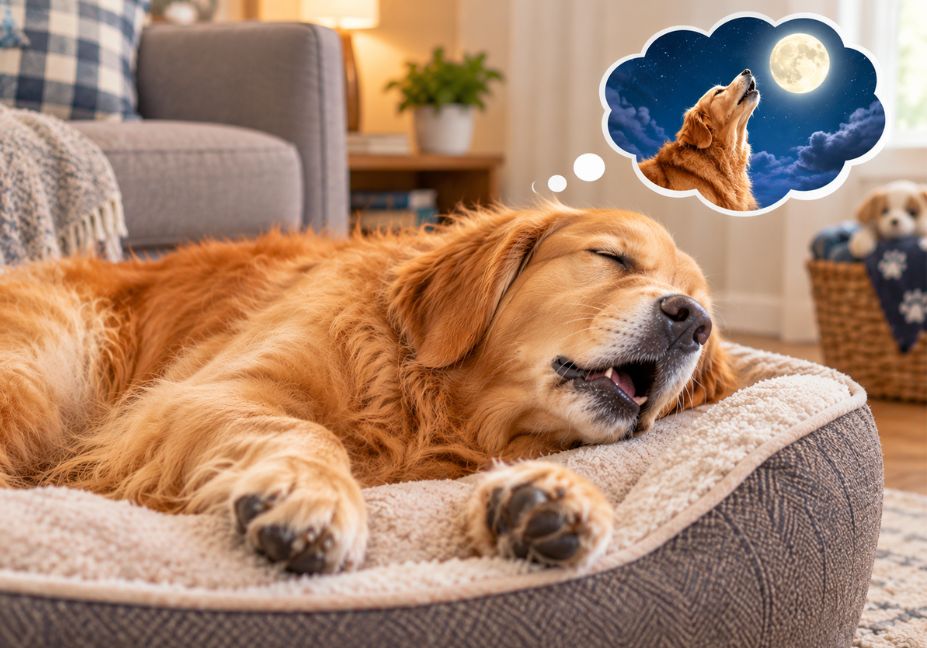
Why Do Dogs Howl in Their Sleep? A bark or a whimper from a sleeping dog is one thing — a full howl is another. It’s louder and longer and can jolt you out of a quiet evening or a sound sleep of your own. If your dog has ever let out a mournful howl while completely unconscious, you’ve probably wondered whether something’s wrong. In most cases, the explanation is a mix of ordinary dreaming and instincts your dog inherited from ancestors who howled long before dogs were domesticated.
Dreaming Is the Most Likely Explanation
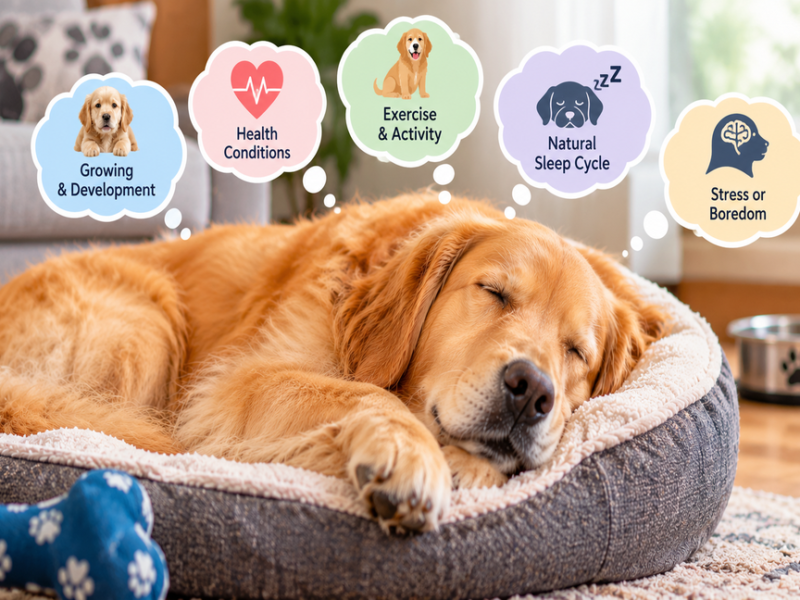
Like humans, dogs cycle through REM (rapid eye movement) sleep, the stage where dreaming happens and the brain is nearly as active as when awake. Twitching paws, fluttering eyelids, and vocalisations — including barks, whimpers, and howls — are all normal signs that a dog is deep in a dream. A howl during REM sleep likely means your dog is dreaming about a scenario that would naturally trigger a howl while awake — chasing something, reuniting with you at the door, or responding to another dog.
Did you know? Watching your dog’s nose, paws, and whiskers twitch while dreaming isn’t just cute — it’s a genuine sign of a healthy REM cycle, the same sleep stage where humans do most of their dreaming too.
Why Howling Specifically? Blame Their Wolf Ancestry
Howling is older and more instinctual than most other dog vocalisations. Wild wolves howl to communicate across long distances, announce their location to the pack, and reinforce social bonds — and that instinct never fully disappeared from domestic dogs, even after thousands of years of living alongside humans. During a vivid dream, this deep-seated behaviour can surface on its own, without any external trigger like a siren or another dog howling nearby.
This is also why breed matters. Dogs bred from working or hunting lines with closer ties to their wild ancestry — Huskies, Malamutes, Beagles, and other hound breeds — tend to howl more in general, and that includes howling in their sleep. If your dog belongs to one of these breeds, an occasional sleep-howl is especially unsurprising.
Could It Be Pain or Distress?
Howling can be a way dogs express discomfort while awake, and the same can hold true during sleep — particularly in a dog who doesn’t normally vocalise this way. If sleep-howling is a new behaviour in an otherwise quiet dog, it’s worth paying attention to whether it comes with:
- Limping, stiffness, or reluctance to move during the day
- Changes in appetite or energy level
- Other signs of discomfort, like restlessness or difficulty settling
A dog that howls occasionally during clearly active dreaming — twitching, paw movement, and a normal demeanour once awake — is different from a dog whose howling seems tied to physical discomfort.
When It’s Something Else: REM Sleep Behaviour Disorder
In rare cases, a dog’s howling on waking (rather than during the dream itself) can point to a real sleep disorder rather than ordinary dreaming. Normally, a part of the brainstem keeps the body’s larger muscles still during REM sleep, so a dog can dream vividly without acting it out. When that mechanism doesn’t work properly — a condition sometimes described as similar to sleepwalking or night terrors in humans — a dog may suddenly wake up disoriented, howling or even growling, and briefly seem confused about their surroundings.
Why Do Dogs Howl in Their Sleep?
Expert note: Veterinary sources caution that a dog waking abruptly and vocalising in this disoriented state can, in rare instances, act defensively or even bite if startled further, since part of the brain hasn’t fully “caught up” to being awake. If this happens repeatedly, it’s worth describing the pattern to your veterinarian, who can help rule out a genuine sleep disorder.
Should You Wake a Howling Dog?
As tempting as it is to interrupt a distressing-sounding dream, most experts advise against startling a sleeping dog awake. Disrupting REM sleep can be disorienting, and a dog abruptly pulled out of a dream may not immediately register that they’re safe — increasing the risk of an unintended nip or bite. If you want to offer reassurance, a calm voice from a short distance is a gentler approach than physically shaking or touching your dog awake.
Pro tip: Never punish a dog for howling, whether awake or asleep. Howling is a natural form of communication, not misbehaviour, and punishing it can create anxiety without addressing the underlying cause.
When to Check In With Your Vet
Occasional sleep-howling, especially in a breed prone to howling or during an otherwise peaceful-looking dream, isn’t a cause for concern. Consider a veterinary visit if you notice:
- Sudden, disoriented waking paired with howling, especially if it happens repeatedly
- New howling behaviour in a dog that’s never done this before, particularly alongside signs of pain
- Howling that escalates in frequency or intensity over time
- Confusion or unresponsiveness for a period after the episode ends
- Daytime symptoms — limping, appetite changes, lethargy — alongside the nighttime howling
Frequently Asked Questions / Why Do Dogs Howl in Their Sleep?
Is it normal for dogs to howl in their sleep?
Yes, particularly during REM sleep when dogs dream. It’s often connected to ancestral wolf instincts and is most common in howl-prone breeds like Huskies, Malamutes, and hounds.
Why does my dog howl more in his sleep than he does awake?
Some dogs express instinctive behaviours like howling more freely during dreams, when the brain is highly active but the dog isn’t consciously restraining themselves the way they might while awake.
Should I wake my dog up if he’s howling in his sleep?
Generally, no. It’s usually better to let the dream run its course rather than startle a sleeping dog, which can be disorienting and increase the risk of a defensive reaction.
Can howling in sleep be a sign of pain?
It’s possible, especially if it’s a new behaviour in a dog that doesn’t normally howl. Pair it with any daytime signs of discomfort and mention it to your veterinarian if you’re concerned.
What is REM sleep behaviour disorder in dogs?
It’s a rare condition where the mechanism that normally keeps a dog’s body still during dreams doesn’t work properly, sometimes causing a dog to wake up abruptly, disoriented, and vocalising. It’s worth discussing with a vet if it happens more than once.
The Bottom Line
For most dogs, a howl in their sleep is simply their inner wolf coming out during a vivid dream — an instinct that predates domestication by thousands of years. Breed, dream content, and even personality all play a role in how vocal a sleeping dog gets. The exceptions worth watching for are new howling tied to pain or a disoriented, confused waking that might point to a genuine sleep disorder — both good reasons for a conversation with your veterinarian.
This article is for informational purposes only and does not substitute for professional veterinary advice. If you have concerns about your dog’s sleep or behaviour, consult your veterinarian.