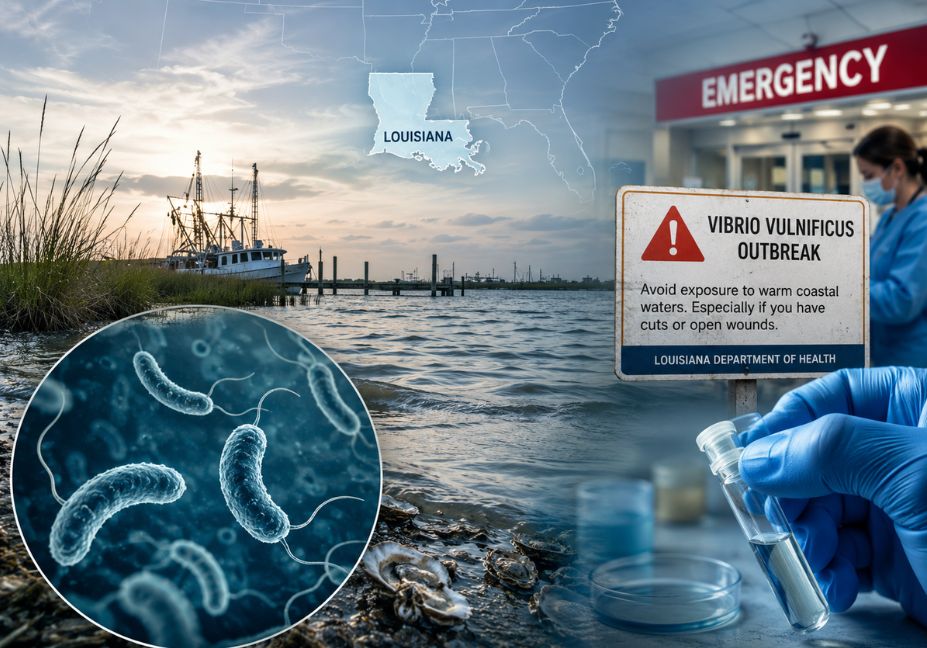
Louisiana health officials are urging residents to take extra precautions around coastal waters and raw seafood after a sharp rise in Louisiana Vibrio vulnificus outbreak infections this year. As of the Louisiana Department of Health‘s early-August 2026 update, nine cases have been reported statewide, all resulting in hospitalisation, and five of those patients have died. That death toll is well above the 10-year average of about one death per year during the same period, even though the case count itself isn’t unusual for this time of year.
Sometimes called “flesh-eating bacteria”, Vibrio vulnificus is a naturally occurring organism in warm coastal waters that can cause severe, fast-moving infections in people with wounds exposed to seawater or those who eat raw or undercooked shellfish. Below is a breakdown of what’s happening in Louisiana right now, who’s most at risk, the symptoms to watch for, and the specific steps health officials recommend to stay safe.
What Is Vibrio Vulnificus?
Vibrio vulnificus is one of about a dozen Vibrio bacteria species capable of causing illness in humans. It occurs naturally in coastal and brackish waters and is most common from May through October, when water temperatures rise. According to the CDC’s overview of Vibrio infections, infection can lead to gastrointestinal illness, wound infections, or bloodstream infections, and severe cases can require intensive care or limb amputation. LDH estimates that about 1 in 5 people with this infection die, sometimes within just one to two days of becoming ill — which is why officials stress fast recognition and treatment.
Louisiana’s 2026 Case Numbers So Far
The numbers reported by LDH in early August 2026 stand out clearly against recent history:
| Period | Cases | Deaths |
| 2026 (as of the Aug. 7 report) | 9 | 5 |
| 2025 (full-year total) | 26 | 5 |
| 10-year average (same period) | 7 | 1 |
All nine of this year’s cases were hospitalised, and all were linked to wounds exposed to seawater — not to eating raw seafood. Every patient also had at least one underlying health condition. Cases were reported across multiple locations in the state, with one exposure occurring in another Gulf Coast state.
Louisiana Vibrio Vulnificus Outbreak
| Did You Know? Nationally, the U.S. sees about 150 to 200 reported Vibrio vulnificus cases a year, and roughly half occur in the five Gulf states — Texas, Louisiana, Mississippi, Alabama, and Florida — with Louisiana and Florida historically seeing the highest numbers of cases and deaths. |
Who Is Most at Risk
Anyone can get a Vibrio infection, but certain health conditions and treatments significantly raise the risk of severe illness:
- Liver disease
- Cancer
- Diabetes
- HIV or thalassaemia
- Immune-suppressing therapy
- Medications that reduce stomach acid
- Recent stomach surgery
| Doctor’s Note: LDH has specifically noted that every case reported in Louisiana this year involved a patient with an underlying health condition — a reminder that people managing conditions like liver disease or diabetes should be especially cautious around coastal water and raw seafood during warm months. |
Symptoms to Watch For
Vibrio vulnificus can cause three different types of infection, each with its own warning signs:
| Infection Type | How It Happens | Key Symptoms |
| Gastrointestinal | Eating raw or undercooked seafood, especially oysters | Watery diarrhoea, stomach cramps, nausea, vomiting, fever, chills |
| Wound infection | Open cut or wound exposed to brackish or salt water | Fever, redness, pain, swelling, warmth, discolouration, discharge |
| Bloodstream infection | Bacteria entering the blood, often from a wound infection | Fever, chills, dangerously low blood pressure, blistering skin lesions |
Symptoms tied to a wound — redness, swelling, warmth, or blistering — can worsen within hours, so LDH recommends contacting a healthcare provider immediately if these appear after any contact with salt or brackish water.
How to Protect Yourself: Treatment Options for Louisiana’s Vibrio Vulnificus Infection
LDH’s guidance centres on a few concrete precautions:
- Stay out of brackish or salt water if you have any open wound, cut, or scrape — or cover it with a waterproof bandage first.
- Wash any wound exposed to seawater or raw seafood thoroughly with soap and water.
- Tell your medical provider about any exposure to water or seafood if you develop a skin infection.
- Use caution with raw or undercooked seafood, especially oysters, if you’re pregnant, immunocompromised, or have liver or stomach conditions.
- Wash your hands after handling raw shellfish, and keep raw seafood juices away from cooked food.
- If you’re in a higher-risk group, wear protective footwear and clothing in the water and gloves when handling raw seafood.
LDH has also announced it will begin posting weekly Vibrio case data on its Public Health Data Spotlight page as this situation develops—a step confirmed in national coverage of the 2026 outbreak and local reporting that notes LDH will begin posting weekly case data going forward.
Frequently Asked Questions About Louisiana Vibrio vulnificus
What is Vibrio vulnificus?
Vibrio vulnificus is a bacterium found naturally in warm coastal and brackish waters. It can cause gastrointestinal illness, wound infections, or bloodstream infections and is sometimes referred to as “flesh-eating bacteria” because of how quickly severe wound infections can progress.
How many people have died from Vibrio in Louisiana in 2026?
As of the Louisiana Department of Health’s early-August 2026 update, five people have died out of nine total reported cases, all of which resulted in hospitalisation. This is well above the state’s 10-year average of about one death per year over the same period.
How do you get infected with Vibrio vulnificus?
Infection typically happens when an open wound is exposed to brackish or salt water, or when someone eats raw or undercooked seafood, particularly oysters. All nine of Louisiana’s 2026 cases were linked to wound exposure to seawater.
Who is most at risk from Vibrio vulnificus?
People with liver disease, cancer, diabetes, HIV, thalassaemia, or a weakened immune system are at the highest risk of severe illness, as are those taking stomach-acid-reducing medication or recovering from recent stomach surgery.
Can Vibrio vulnificus be treated?
Yes, but early treatment is critical. Wound and bloodstream infections can progress rapidly, sometimes becoming life-threatening within one to two days, so prompt medical attention for any wound that shows redness, swelling, or blistering after water exposure is essential.
How can I protect myself from Vibrio vulnificus?
Keep open wounds out of brackish or salt water, or cover them with a waterproof bandage. Wash any exposed wounds thoroughly, avoid raw or undercooked shellfish if you’re in a higher-risk group, and wash your hands after handling raw seafood.
Conclusion
Louisiana’s 2026 Vibrio vulnificus numbers — five deaths among nine hospitalised cases so far — mark a notable jump in severity compared to recent years, even though officials say the overall case count isn’t unusual for the season. The consistent thread across every case this year is a wound exposed to seawater in someone with an existing health condition, which makes prevention fairly straightforward: keep cuts and wounds covered and out of brackish or salt water, and seek care quickly if signs of infection appear.
This is a developing public health situation, so case numbers may change. Check the Louisiana Department of Health’s website for the latest updates, and explore more evidence-based health content at healthlinesignals.com.
| Medical Disclaimer: This article is for informational purposes only and does not substitute professional medical advice. If you suspect a Vibrio infection, especially after a wound has been exposed to seawater, contact a healthcare provider immediately. |