
Introduction
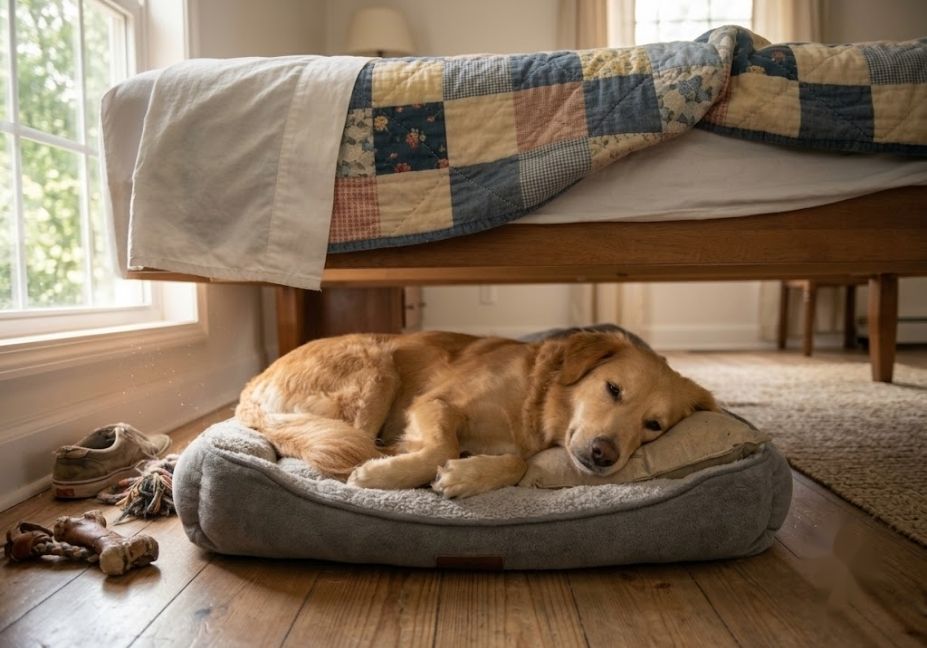
,,Why,Why Does My Dog Sleep Under My Bed? You spent $80 on a plush dog bed. You placed it in the perfect spot. And yet — every morning, you find your dog curled up under your bed, legs sticking out, completely unbothered.
You’re cosy. Cosy. You’recosyYou’re not alone. Thousands of dog owners ask the same question every day: why does my dog sleep under my bed instead of in the cosy spot I set up for them?
TheThebehaviourThe short answer: it’s almost always normal. Dogs are den animals by nature, and the space under your bed perfectly mimics the enclosed, scent-rich shelter their instincts crave. But the reasons behind this behaviour go deeper — and occasionally, they signal something worth paying attention to.
Below, behaviour Below,behaviourBelow, we cover 7 science-backed reasons your dog sleeps under the bed, how to tell sleeping apart from hiding, and what to do if the behaviour concerns you.
1. The Den Animal Instinct — It’s in Their DNA
DogseekDogsDogsseekDogs are descendants of wolves, and denning behaviour is hardwired into their biology. In the wild, canines seek small, enclosed dens for protection while sleeping — a time when they’re most vulnerable to predators.
environment”. environment”. environment”.The space under your bed is a near-perfect modern den: it’s dark, enclosed, and has only one or two entry points. According to the American Kennel Club, certified trainer Jessika Jake explains that dogs love these spaces because “it’s their fun little fort to relax in — they like the little den environment”.
This wins every time. ThisThiswins everyThis instinct doesn’t disappear just because your dog has a memory-foam bed waiting for them. The cave-like feel under your bed wins every time.
| 🐾 Did You Know?Dogs have been domesticated for over 15,000 years — but their denning instinct remains almost identical to that of wild wolves. Enclosed spaces trigger a neurological calming response in most dogs. |
2. Your Scent Is Deeply Comforting
Dogs have approximately 300 million olfactory receptors — compared to our 6 million. Your bed is saturated with your scent, and for your dog, that smell is one of the most calming things in the world.
even even when present – evenWhen your dog sleeps underneath it, they’re essentially wrapping themselves in your presence – even when you’re not physically there. This is especially meaningful for dogs with mild separation anxiety.
Why Does My Dog Sleep Under My Bed?
ABehaviour ABehaviourA study published in the Journal of Veterinary Behaviour found that co-sleeping proximity reduces separation anxiety in dogs, creating a sense of security and trust. Sleeping under your bed delivers that same scent-based comfort.
| 💡 Pro TipIf your dog is anxious when you leave, place a worn T-shirt near their regular bed. Your scent alone can significantly reduce stress behaviors — no need for them to sneak under the bed. |

3. Temperature Regulation
Dogs don’t regulate body temperature as efficiently as humans. The floor under your bed can be cooler in summer — especially on tile or hardwood — and warmer in winter due to the trapped heat from your mattress and body.
YouYouground andYou might notice seasonal shifts in this behaviour: more under-bed sleeping in hot weather as your dog seeks the cool ground and again in colder months when the enclosed space holds warmth.
This behaviourThisbehaviouralThis is simply smart self-regulation, not a behavioural problem.
| 🩺 Veterinarian’s NoteDr. Meaghan Thomas, DVM, at East Ridge Animal Hospital notes that dogs “like having private den-like spaces” and often choose spots based on both temperature and emotional need. If your dog’s sleeping location changes drastically with seasons, that’s perfectly normal thermoregulation. |
4. Noise Sensitivity and Anxiety
If your dog dives under the bed during thunderstorms, fireworks, or when guests arrive, noise phobia or social anxiety is likely the trigger. The enclosed space muffles sound and reduces visual stimulation — two things that overwhelm anxious dogs.
Signs this is anxiety-driven rather than just preference:
- They bolt under the bed suddenly when a noise occurs
- They’re shaking, panting, or drooling while under there
- They refuse to come out even when called
- The behavior only happens during specific events (storms, visitors, loud TVs)
ifOr, ifor,If your dog shows these signs regularly, consult your vet. Canine anxiety is highly treatable through behaviour modification, calming supplements, or in some cases, medication.
5. Privacy and Personal Space
Can pets? Justcan pets – canJust like humans retreat to a quiet room when overstimulated, dogs need alone time too. A busy household – kids running, appliances humming, other pets – can overwhelm even the most social dog.
The space under your bed is low-traffic, quiet, and off-limits to most distractions. For your dog, it’s their version of a private retreat — and that’s completely healthy.
Why Does My Dog Sleep Under My Bed?
well-being. well-being. well-being.This is especially true in multi-pet homes or houses with young children. Giving your dog an undisturbed space to decompress is important for their well-being.
| 💡 Pro TipNever force your dog out from under the bed if they’re clearly resting there for privacy. Forcing them increases anxiety. Instead, use treats and gentle encouragement when you need them to come out. |
6. Habit and Learned Behavior
Sometimes, the simplest explanation is correct: your dog sleeps under the bed because they’ve always done it, and it’s worked out well for them.
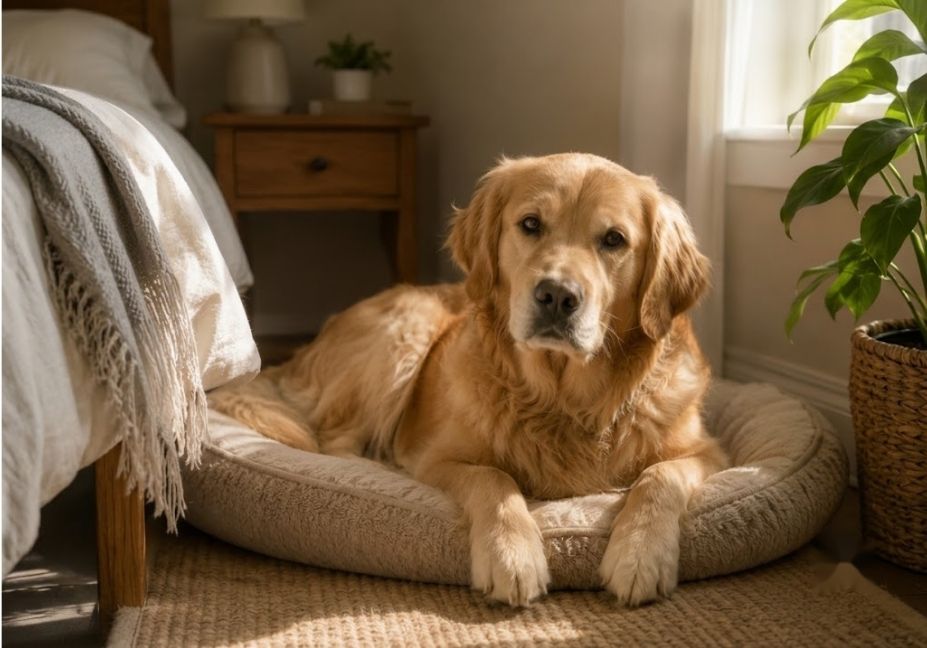
Why do dogs sleep with their bum facing you
Dogs are creatures of habit. If your dog found the under-bed spot comforting during puppyhood, after a stressful event, or simply by accident one afternoon — they’re likely to keep returning. Positive associations are powerful and can outlast their original cause.
behaviours. behaviours. behaviours.This is benign unless it’s paired with other concerning behaviours. A dog who happily trots under the bed at bedtime and comes out cheerful in the morning is simply a creature of comfortable routine.
7. Health Issues or Pain (When to Be Concerned)
In the wild, sick or injured animals hide. Your domestic dog carries this instinct — a dog in pain or feeling unwell may retreat under the bed as a protective response.
Why Does My Dog Sleep Under My Bed?
ThisThisbehaviourThis becomes a concern when the behaviour is sudden or accompanied by other symptoms. Watch for:
- A new or sudden change in sleeping location (dog has never done this before)
- Difficulty getting in or out from under the bed
- Whimpering, yelping, or growling when touched
- Loss of appetite, lethargy, or unusual stillness
- Refusal to come out for meals, walks, or regular routines
If you observe two or more of these signs together, consult your veterinarian promptly. Early assessment of pain or illness leads to much better outcomes.

| 🩺 Medical DisclaimerThis article is for informational purposes only and does not substitute professional veterinary or medical advice. If your dog’s behavior changes suddenly or is accompanied by physical symptoms, consult a licensed veterinarian. |
Sleeping vs. Hiding Under the Bed — How to Tell the Difference
Behaviour – notbehaviourNot all under-bed behaviour is the same. Here’s a quick diagnostic:
| SLEEPING (Normal) | HIDING (Needs Attention) |
| Relaxed body posture | Tense, shaking, or panting |
| Comes out when called | Refuses to come out |
| Normal appetite and energy | Loss of appetite, lethargy |
| Habit or preference-driven | Sudden change with clear trigger |
How to Redirect Your Dog to a Different Sleeping Spot
If you’d prefer your dog sleep elsewhere, here’s what actually works:
- Buy a den-style bed — covered or bolster-style beds mimic the enclosed feeling they love
- Place the new bed in a quiet, low-traffic corner near your bedroom
- Add a worn T-shirt or piece of your clothing for scent comfort
- Use positive reinforcement — reward your dog with treats every time they use the new bed
- Block off under-bed access gradually once the alternative is established
- it Never force Neverforce – itNever punish or force; it increases anxiety and makes redirection harder
Patience matters here. Most dogs take 1–3 weeks to fully transition. Mayo Clinic researchers found that dogs in the bedroom (even outside the bed) still contributed to satisfactory sleep efficiency for owners — so proximity itself isn’t the issue.
FAQ — People Also Ask
Is it normal for dogs to sleep under the bed?
if behaviourif behaviourbehaviour. Yes, it’s completely normal for most dogs. The space under your bed satisfies their natural denning instinct, provides scent comfort, and offers a private retreat. It only warrants concern behaviourbehaviour behavior is sudden, extreme, or paired with physical symptoms like shaking, panting, or loss of appetite.
Why did my dog suddenly start sleeping under my bed?
A sudden change in sleeping location usually has a trigger: a new pet, a household move, a loud event, or a change in routine. It can also signal pain or illness. If the behavior appears overnight and is accompanied by other symptoms, see your vet.
Should I let my dog sleep under my bed?
behaviourbehaviourbehaviourbehaviourbehaviourbehaviourbehaviourbehaviourIf your dog is happy and healthy and comes out freely, there’s no reason to stop them. Ensure the space is clean, free from hazards (cords, sharp objects), and well-ventilated. The only reason to intervene is if the behavior stems from unaddressed anxiety or fear.
How do I get my dog to stop sleeping under my bed?
Offer a den-style alternative (covered or bolster bed), place it near your bed with your scent on it, and use consistent positive reinforcement. Block access to under the bed only once the alternative is established. Avoid forcing the change — gradual transitions work best.
Can sleeping under the bed mean my dog is sick?
behaviour,behaviour,behaviour,behaviour,behaviour,behaviour,Sometimes. Dogs instinctively hide when unwell or in pain. Watch for accompanying signs: difficulty moving, whimpering, refusing food, unusual stillness, or behavioural changes. If you notice two or more of these alongside the hiding behavior, consult your veterinarian promptly.
Conclusion
When your dog crawls under the bed, they’re usually telling you something simple: this feels safe, this smells like you, and this is my space. Most of the time, it’s a sign of a secure, instinct-driven animal doing exactly what their biology tells them to.
The denningThe key takeaways: denning instinct and scent comfort drive most under-bed sleeping. Temperature regulation and noise sensitivity are common secondary reasons. And sudden, symptom-paired hiding is the one scenario that deserves veterinary attention.
Cosy:’Cosy’: Cosy: Cosy:Cosy: Cosy: Cosy: ‘Cosy’:Cosy: Cosy: Cosy: ‘Cosy’: Cosy: Cosy:’Cosy’:,,Cosy:,Cosy: If you’re happy to let your dog have their cosy little fort — go for it. If you’d rather redirect them, now you have the tools to do it kindly. Bookmark this guide and explore more evidence-based pet health content at healthlinesignals.com.