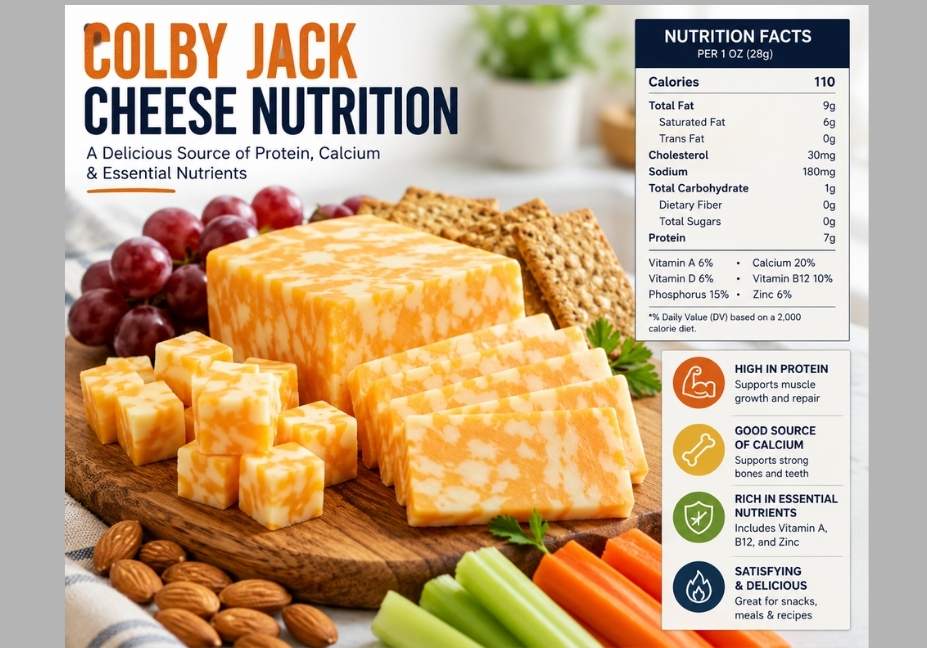
great – butMost people reach for Colby Jack cheese because it tastes great — but it turns out this marbled American classic is pulling nutritional weight far beyond what its mild flavour suggests. One ounce delivers 6–7 grams of protein, around 200 mg of calcium, and nearly zero carbohydrates. That’s a nutrient-dense profile few snack foods can match.
Colby Jack cheese nutrition has become a real search topic as more people shift toward low-carb, high-protein, and whole-food eating patterns. Whether you’re tracking macros, managing lactose sensitivity, or simply trying to eat smarter, understanding what’s in your cheese matters.
The USDA and dairy researchers have studied semi-hard American cheeses like Colby Jack extensively, and the findings are more nuanced than the old “cheese is bad for you” headline suggests. This guide breaks down every major nutrient, puts them in context, and answers the questions real people are actually asking.
What Is Colby Jack Cheese?
Colby Jack – sometimes written as ‘Colby-Jack’ – is a marbled blend of Colby and Monterey Jack cheeses, two American originals. Colby originates from Wisconsin, while Monterey Jack traces its roots to California. The two cheeses are prepared separately using pasteurised milk and bacterial cultures, then combined before pressing. Annatto, a natural plant-based colourant, gives the Colby portion its signature orange hue. Wikipedia
The result is a semi-hard cheese with a creamy, mild flavour and excellent melting properties — which explains why it’s a staple in everything from breakfast omelettes to nachos. You can learn more about its origins on Wikipedia’s Colby-Jack page.
Colby Jack Cheese Nutrition Facts Per Ounce
A standard 1-ounce (28g) serving of Colby Jack cheese contains approximately 110 calories. The macronutrient split is roughly 74% fat, 4% carbohydrates, and 25% protein. Nutrifox
Here’s the full breakdown per 1 oz (28g) serving, according to the USDA. FoodData Central:
| Nutrient | Amount per 1 oz | % Daily Value |
|---|---|---|
| Calories | 110 | — |
| Total Fat | 9g | 12% |
| Saturated Fat | 5–6g | 25–30% |
| Cholesterol | 25mg | 8% |
| Sodium | 180mg | 8% |
| Total Carbohydrates | <1g | <1% |
| Protein | 6–7g | 14% |
| Calcium | ~200mg | 20% |
| Vitamin B12 | ~0.4 mcg | 17% |
| Phosphorus | ~130mg | 10% |
| Vitamin A | ~75mcg RAE | 8% |
discomfort evenDid You Know? Colby Jack contains less than 0.15 grams of lactose per ounce – far below the threshold that typically causes discomfort, even in lactose-sensitive individuals.
5 Impressive Colby Jack Cheese Health Benefits
Now that the numbers are clear, let’s talk about what they actually mean for your health.
1. Supports Bone Density With High-Bioavailability Calcium
Colby Jack provides roughly 200 mg of calcium per ounce, covering about 20% of the daily recommended value. Calcium is essential for bone strength, muscle contraction, and nerve signalling. FnF Media LLC
What matters as much as the amount is the form. Dairy calcium is among the most bioavailable forms — meaning your body actually absorbs and uses it efficiently. Paired with phosphorus (also present in Colby Jack), these two minerals work in tandem to maintain bone density throughout life.
- Bone mineralization and fracture prevention
- Muscle contraction and nerve function
- Dental enamel integrity
2. Delivers High-Quality Complete Protein
One serving of Colby Jack provides approximately 7 grams of high-quality protein, which is essential for muscle repair, satiety, and metabolic function. Healthfulness News
Cheese protein is a “complete” protein, meaning it contains all nine essential amino acids your body cannot produce on its own. This makes Colby Jack a useful protein source for vegetarians, athletes, and anyone trying to maintain muscle mass.
Pro Tip: Pair Colby Jack with a high-fibre food (like apple slices or whole-grain crackers) to create a more balanced macro profile, since cheese contains no fibre on its own.
3. Rich in Vitamin B12 and Phosphorus
Colby Jack is an excellent source of vitamins B2 and B12, as well as phosphorus, selenium, and zinc – nutrients that support energy metabolism, red blood cell production, and immune function. Nutrition Advance
Vitamin B12 is particularly valuable for older adults and vegetarians, who are at higher risk of deficiency. A single ounce of Colby Jack contributes about 17% of your daily B12 needs.
4. Extremely Low in Carbohydrates — Keto-Friendly
Colby Jack contains less than 1 gram of carbohydrates per ounce, making it an excellent choice for people following low-carb or ketogenic meal plans. SnapCalorie
carb”,Its fat-to-carb ratio is nearly ideal for ketosis. Unlike processed snack foods that claim to be “low carb,” Colby Jack is a whole food with a naturally negligible carb count.
5. Contains Surprisingly Low Lactose
According to the National Institutes of Health, many individuals with lactose intolerance can handle up to around 12 grams of lactose without experiencing significant symptoms. Colby Jack contains only approximately 0.15 grams of lactose per ounce. Nutrition Advance
This is because both Colby and Monterey Jack are washed-curd cheeses. The curd-washing process actively removes lactose during production, making the final product tolerable for most lactose-sensitive people. The NIH’s lactose intolerance dietary guidance confirms that aged and semi-hard cheeses are often the best dairy options for this group.
| Cheese | Calories | Protein | Fat | Calcium |
| Colby Jack | 110 | 7g | 9g | 200mg |
| Cheddar | 113 | 7g | 9g | 202mg |
| Mozzarella | 72 | 7g | 4.5g | 183mg |
| Swiss | 106 | 8g | 8g | 224mg |
Colby Jack vs. Cheddar vs. Mozzarella: Nutrition Comparison
Many people wonder how Colby Jack stacks up against more familiar options. Here’s a clear head-to-head:
| Nutrient (per 1 oz) | Colby Jack | Cheddar | Mozzarella (whole) |
|---|---|---|---|
| Calories | 110 | 114 | 85 |
| Protein | 6–7g | 7g | 6g |
| Total Fat | 9g | 9.4g | 6.3g |
| Saturated Fat | 5–6g | 6g | 4g |
| Carbs | <1g | <1g | <1g |
| Sodium | 180mg | 185mg | 177mg |
| Calcium | ~200mg | 202mg | 143mg |
Colby Jack and cheddar are nutritionally very similar in protein and fat content, while mozzarella has fewer calories and less fat, making it a slightly lighter option. SnapCalorie
Bottom line: Colby Jack is nearly identical to cheddar but wins on flavour versatility and melting properties. Mozzarella is leaner — useful if you’re aggressively cutting calories — but delivers less calcium per serving.
Expert Note: For bone health specifically, Colby Jack edges out mozzarella thanks to its higher calcium content per ounce. For weight-loss-focused diets, part-skim mozzarella may be a better daily choice.
Is Colby Jack Cheese Good for Your Heart?
This is where the science gets interesting — and more nuanced than older dietary guidelines suggested.
A meta-analysis including 21 prospective studies found no significant associations between dietary saturated fat intake and the risk of coronary heart disease, stroke, or cardiovascular disease. Separately, a large European cohort study involving over 340,000 participants found that cheese intake was actually inversely associated with the risk of type 2 diabetes. nil
This doesn’t mean unlimited cheese is a free pass. But the emerging consensus in nutritional science — reflected in a 2022 review published in Nutrients via PubMed — is that whole-food dairy, including cheese, affects cardiovascular biomarkers differently than isolated saturated fat.
What this means practically:
- Colby Jack in moderate amounts (1–2 oz/day) is unlikely to harm heart health in most people
- High sodium intake (multiple servings + processed foods) is a more pressing concern for blood pressure
- People with existing cardiovascular disease should consult their physician about saturated fat targets
Potential Downsides to Consider
No food is without trade-offs. Here’s an honest look at where Colby Jack requires mindful consumption:
matters – especiallyHigh in Saturated Fat: Colby Jack is relatively high in sodium and saturated fat, and diets high in these nutrients can potentially elevate LDL cholesterol and blood pressure. Nutrition Advances At 25–30% of the daily saturated fat limit per ounce, portion control matters — especially if your diet is otherwise high in animal fats.
Sodium Can Add Up: At 180 mg per ounce, one slice looks harmless. But two slices on a sandwich, plus deli meat and condiments, can push you toward 600–700mg of sodium in a single meal.
No Fibre: Colby Jack has zero dietary fibre. If you’re relying on it heavily as a protein source, be sure your overall diet includes plenty of vegetables, legumes, or whole grains.
Not for Everyone: People with dairy allergies (distinct from lactose intolerance) should avoid all cheese. Pregnant individuals should choose pasteurised versions, which all commercial Colby Jack products in the U.S. are by law.
How to Add Colby Jack to a Healthy Diet
The best way to enjoy Colby Jack nutrition benefits without the downsides is thoughtful portion use:
- Breakfast: Melt 1 oz over scrambled eggs with spinach for a calcium + protein start
- Lunch: Add a slice to a turkey and avocado wrap – keeps you full without spiking blood sugar
- Snack: Cube 1 oz and pair with apple slices or mixed nuts for a balanced low-carb snack
- Dinner: Use shredded Colby Jack on a veggie-packed taco instead of sour cream to boost protein without excess calories
- Keto meals: Melt into cauliflower bake or use as a taco shell base (the “cheese crisp” method)
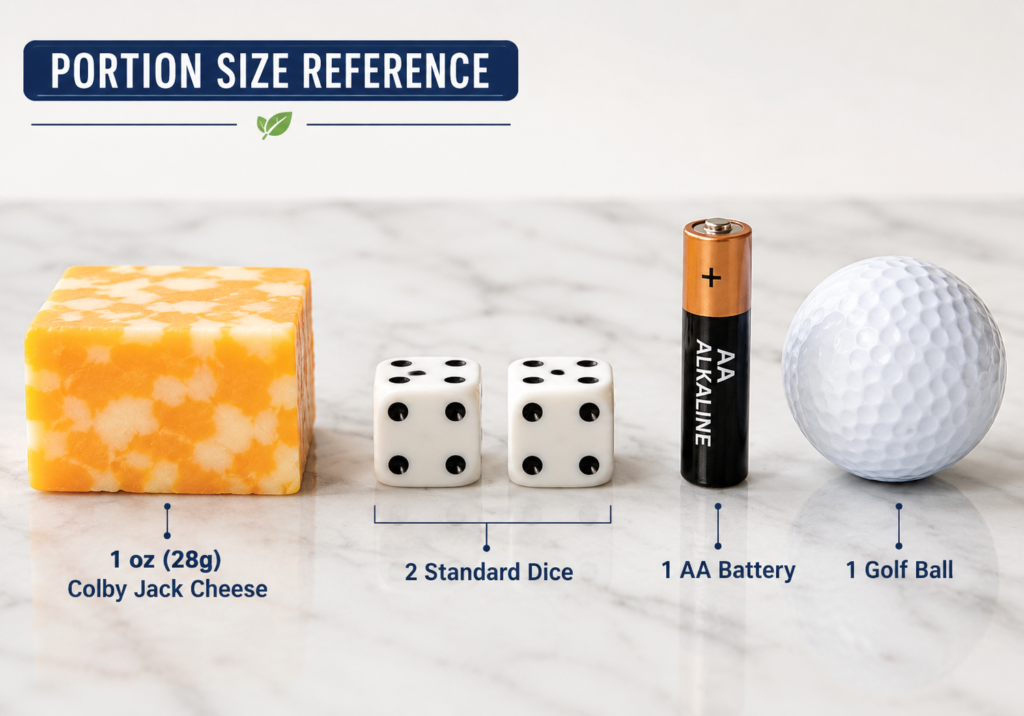
Recommended serving size: 1–1.5 oz per meal (one standard slice or ¼ cup shredded). This gives you meaningful calcium and protein without pushing saturated fat or sodium into problematic territory.
FAQ — People Also Ask
How many calories are in 1 oz of Colby Jack cheese?
There are approximately 110 calories in a 1-ounce (28g) serving of Colby Jack cheese. The breakdown is roughly 74% from fat, 25% from protein, and about 4% from carbohydrates. Nutrifox. This makes it a calorie-dense but nutrient-rich food — ideal in moderation.
Is Colby Jack cheese good for you?
Yes, in moderate amounts. Colby Jack is a solid source of calcium (20% DV per oz), complete protein (6–7 g), vitamin B12, and phosphorus. It’s very low in carbs and lactose. The main considerations are its saturated fat content (~25–30% DV) and sodium, which should be monitored in the context of your overall diet.
Is Colby Jack cheese keto-friendly?
Yes, Colby Jack contains less than 1 gram of carbohydrates per ounce, making it an excellent choice for those following low-carb or ketogenic meal plans. SnapCalorie‘s high fat content also supports the macros typical of ketogenic eating.
How does Colby Jack compare to cheddar nutritionally?
g),(~200 mg). The two cheeses are nearly identical per ounce—similar in calories (~110–114), protein (~7g), fat (~9 g), and calcium (~200mg). Cheddar is slightly higher in some B vitamins, while Colby Jack tends to have a milder flavour and more open texture. Food structure: Choosing between them is largely a matter of taste and intended use.
Can people with lactose intolerance eat Colby Jack?
g. Most0.15 gMost can. Due to the ageing and fermentation processes involved in cheese production, the lactose content in Colby-Jack cheese is significantly reduced, making it more tolerable for those with lactose intolerance. Cheese Scientist: At just 0.15g per ounce, it’s one of the lowest-lactose cheese options available.
How much protein is in Colby Jack cheese?
Nutrition Advance — Anutrition advanceA single ounce (28.35 g) serving of Colby Jack provides 14% of the daily value for protein Nutrition Advance — roughly 6–7 grams of complete protein containing all essential amino acids. For a snack-sized food, that’s a meaningful contribution to daily protein goals.
Conclusion
Colby Jack cheese is more than a crowd-pleasing topping – it’s a genuinely nutritious dairy food when eaten in reasonable portions. The key takeaways are simple: one ounce gives you real calcium and complete protein with essentially zero carbs, making it valuable for bone health, muscle support, and low-carb eating patterns alike. Its naturally low lactose content also makes it accessible to many people who assume cheese is off the table.
The caveats are real too. Saturated fat and sodium content mean it’s not a food to eat mindlessly by the block. Think of it as a concentrated nutrition tool — a little goes a meaningful way.
Understanding Colby Jack cheese nutrition puts you in control of how this versatile cheese fits your diet — whether you’re tracking macros, eating for long-term bone health, or just building a better lunch.
This article is for informational purposes only and does not substitute professional medical advice. Consult your doctor or a registered dietitian before making significant changes to your diet, especially if you have existing health conditions.