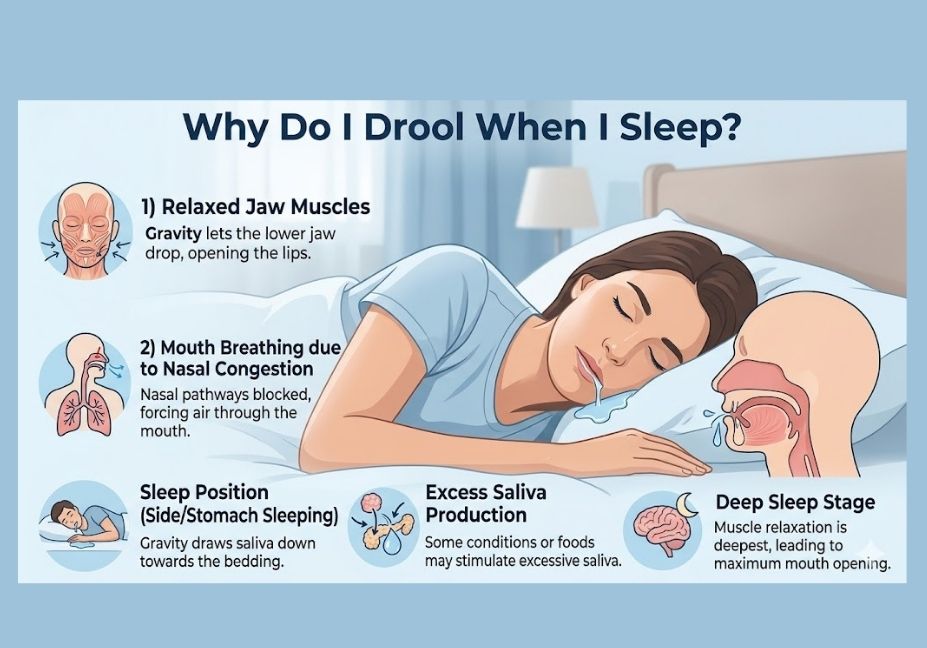
You’reYou wake up, feel the damp patch on your pillow, and wonder, ‘Why does this keep happening? ‘ You’re not alone. Why do I drool when I sleep? medically called sialorrhea, affects a significant portion of adults — and most of the time it’s completely harmless. But occasionally, it’s your body quietly signalling something worth paying attention to.
The truth is, why you drool when you sleep almost always comes down to one of two things: your mouth is open when it shouldn’t be, or your body isn’t swallowing saliva as efficiently as it does when you’re awake. Both can have multiple underlying causes — from your sleep position to allergies to prescription medications.
According to the National Sleep Foundation, nighttime drooling is one of the most common sleep-related complaints, yet most people never connect it to a treatable root cause. That’s exactly what this guide will help you do.
What Is Drooling During Sleep — And Why Does It Happen at All?
Drooling is simply saliva escaping your mouth while you sleep. During the day, you swallow saliva automatically — roughly once per minute without even thinking about it. During sleep, that swallowing reflex slows dramatically, sometimes to once every few minutes.
At the same time, your facial and mouth muscles relax deeply, especially during NREM (non-rapid eye movement) deep sleep. This combination — less swallowing, more muscle relaxation — means saliva can pool and spill out, especially if your mouth is open.
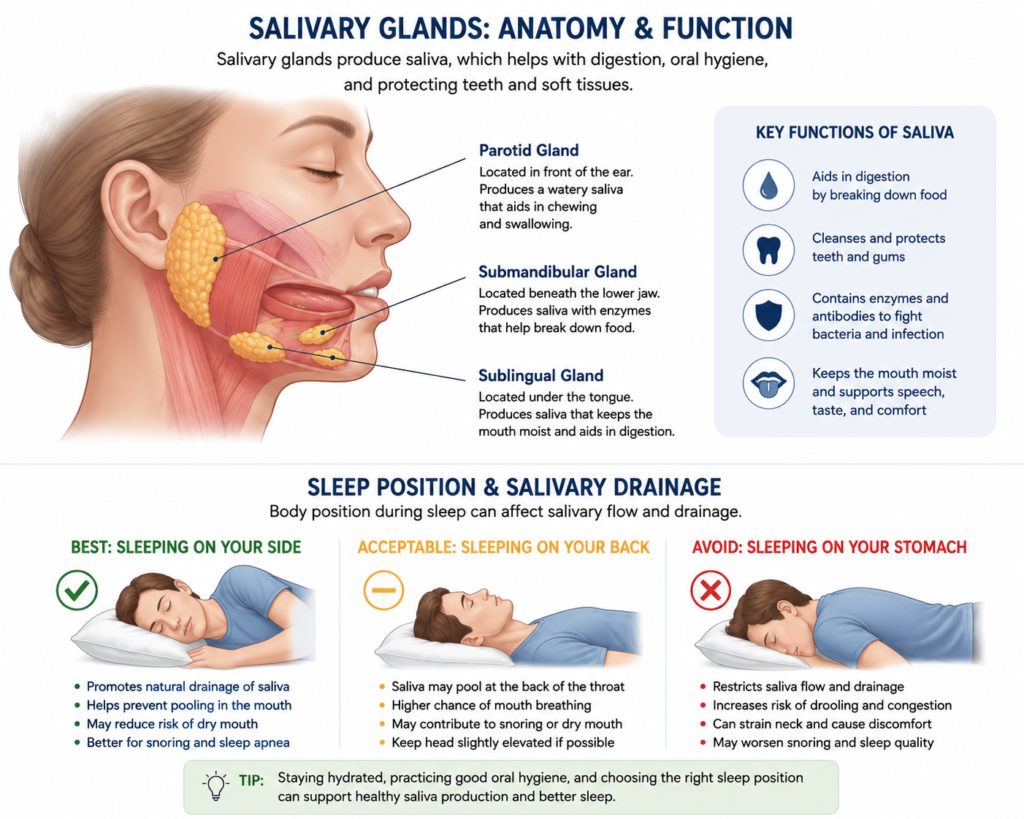
According to Cleveland Clinic’s overview of drooling causes, the submandibular glands (responsible for about 70% of saliva production) continue low-level output all night. They never fully switch off — which is why drooling is a nightly possibility for many people.
Did You Know? Your body produces between 0.5 and 1.5 litres of saliva every single day. Even during sleep, production continues — it just doesn’t get swallowed as often.
The 7 Most Common Reasons You Drool When You Sleep
1. Your Sleep Position
This is the most common cause — and the easiest to fix.
When you sleep on your side or stomach, gravity works against you. Saliva pools towards your lips and, if your mouth is even slightly open, it escapes. Back sleepers (sleeping supine) are far less likely to drool because gravity keeps saliva toward the back of the throat, where it gets swallowed naturally.
Position-related drooling fixes:
- Train yourself to sleep on your back using pillow barriers on each side
- Use a contoured or wedge pillow to slightly elevate your head
- If side sleeping is unavoidable, sleep on your right side (which is also better for acid reflux)
Pro Tip: Sew a tennis ball into the back of your sleep shirt. It sounds silly, but this old trick genuinely discourages rolling to your side during the night.
Why Do I Drool When I Sleep?
2. Mouth Breathing from Nasal Congestion
When your nose is blocked — from allergies, sinus infections, a deviated septum, or dry indoor air — your body automatically switches to mouth breathing. An open mouth is an open door for saliva.
This is why many people drool more during allergy season or when they have a cold. The congestion forces mouth breathing; the mouth breathing causes drooling.
Nasal congestion solutions:
- Saline nasal rinse before bed
- Nasal corticosteroid sprays (e.g., fluticasone) for allergies
- Adhesive nasal strips to physically widen the nostrils
- A bedroom humidifier to prevent dry air irritation
According to the Sleep Foundation’s clinical review of nighttime drooling, resolving nasal obstruction is one of the most effective ways to stop mouth breathing — and by extension, drooling — without any medication targeting saliva directly.
3. Obstructive Sleep Apnea (OSA)
This is the cause worth taking seriously.
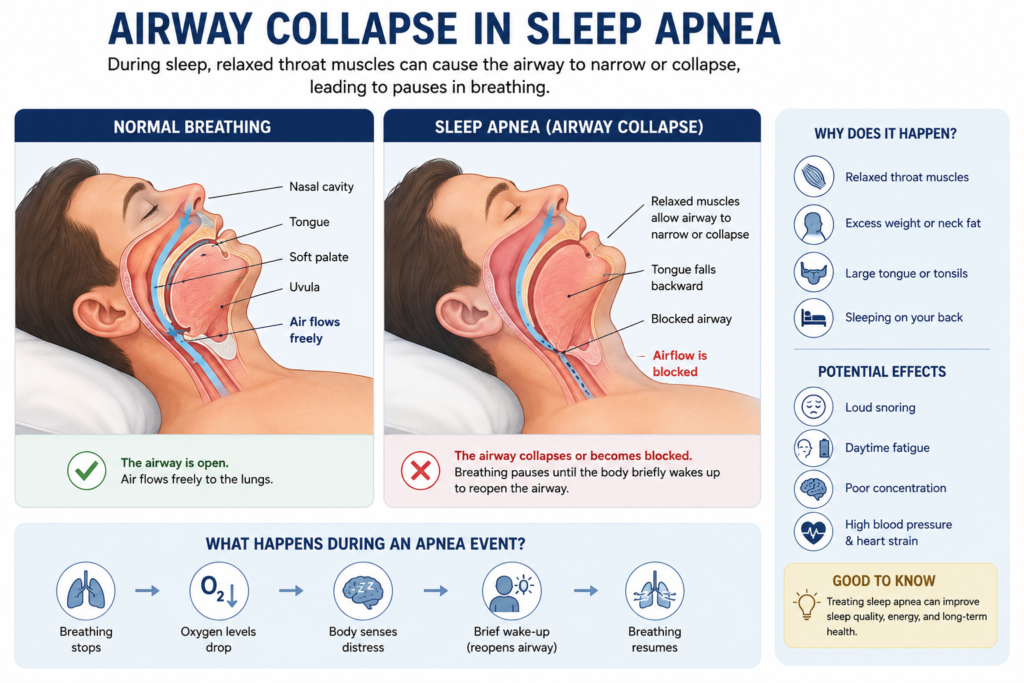
Obstructive sleep apnoea occurs when your airway partially or fully collapses during sleep, forcing your body to open the mouth wider to compensate. The result is increased mouth breathing — and significant drooling. OSA-related drooling is often accompanied by:
- Loud snoring or gasping sounds
- Waking up with a dry mouth
- Morning headaches
- Excessive daytime sleepiness
- Difficulty concentrating
Doctor’s Note: If you consistently drool AND experience any three of the above symptoms, ask your doctor for a polysomnography (sleep study). Untreated sleep apnoea raises the risk of heart disease, stroke, and high blood pressure. Treating it with CPAP therapy often eliminates the drooling as a secondary benefit.
4. GERD (Acid Reflux)
Gastro-oesophageal reflux disease triggers excessive saliva as a protective mechanism — your body produces more saliva to neutralise stomach acid rising into the oesophagus. This reflex is called waterbrash, and it can occur during sleep without you waking fully.
Signs GERD may be behind your drooling:
- Sour or bitter taste in the morning
- Heartburn or chest discomfort at night
- Difficulty swallowing (dysphagia)
- Feeling of a lump in your throat
Elevating your head 6–8 inches during sleep, avoiding large meals within 3 hours of bedtime, and discussing acid-reducing medication with your doctor are the primary interventions.
Why Do I Drool When I Sleep?
5. Medications That Affect Saliva
Several common medication classes are well-documented triggers for excessive saliva production (sialorrhea) as a side effect. According to research on sialorrhea management published on PubMed, this is particularly associated with:
Why Do I Drool When I Sleep?
| Medication Type | Examples | Mechanism |
|---|---|---|
| Antipsychotics | Clozapine | Stimulates salivary glands directly |
| Cholinesterase inhibitors | Donepezil (Alzheimer’s) | Increases acetylcholine → more saliva |
| Some antibiotics | Certain broad-spectrum types | Alters oral environment |
| Seizure medications | Various | The side effect profile varies |
| Opioids | Morphine, codeine | Can impair swallowing reflex |
Important: Never stop a prescribed medication because of drooling without consulting your doctor. Dose adjustments or timing changes (e.g., taking the medication in the morning) may resolve the problem without stopping treatment.
6. Neurological Conditions
Conditions affecting muscle control and swallowing function can cause both daytime and nighttime drooling. These include:
- Parkinson’s disease — affects swallowing muscle coordination
- Stroke — can impair one-sided facial muscle control
- Cerebral palsy — affects overall oral motor function
- Multiple sclerosis (MS) — disrupts nerve signals to swallowing muscles
- ALS — progressive muscle weakness including throat muscles
Neurological drooling is typically accompanied by other symptoms — facial weakness, slurred speech, and difficulty chewing or swallowing — and requires medical evaluation and specialised care.
Why Do I Drool When I Sleep?
7. Infections and Temporary Triggers
Strep throat, tonsillitis, mononucleosis, and sinus infections can all temporarily increase saliva production and make swallowing uncomfortable, leading to drooling. Pregnancy-related acid reflux and nausea are also well-recognised temporary causes.
These cases typically resolve as the underlying infection or condition clears.
7 Causes of Drooling
During Sleep
Why you wake up with a wet pillow — and what your body is trying to tell you
Side or stomach sleeping lets gravity pull saliva toward your lips. Back sleeping is the single most effective positional fix.
Most CommonBlocked nose from allergies, sinus infections, or a deviated septum forces open-mouth breathing — creating the perfect pathway for drool.
Very CommonWhen the airway partially collapses during sleep, the body forces the mouth open to breathe. Drooling here is often a warning sign. Watch for these red flags alongside drooling:
Stomach acid triggers extra saliva production as a protective response (called waterbrash). This can happen silently during sleep.
Medical CauseAntipsychotics (especially clozapine), Alzheimer’s medications, some antibiotics, and seizure drugs can stimulate excess saliva as a side effect.
Medical CauseParkinson’s disease, stroke, MS, cerebral palsy, and ALS can impair swallowing muscle control — causing both daytime and nighttime drooling.
Seek EvaluationStrep throat, tonsillitis, mononucleosis, sinus infections, and pregnancy-related reflux can temporarily increase drooling. Usually resolves on its own.
TemporaryWhen To See a Doctor
- Drooling is sudden or significantly increased
- Accompanied by snoring or gasping (sleep apnea sign)
- Facial weakness or slurred speech present
- Difficulty swallowing alongside drooling
- Home remedies aren’t helping after 2–3 weeks
How to Stop Drooling When You Sleep: Fix by Cause
Healthline’s evidence-based guide to stopping drooling identifies the most effective approach: treat the root cause rather than the symptom.
Here’s a practical fix-by-cause summary:
If the cause is sleep position:
→ Switch to back sleeping; use pillow barriers or a wedge pillow
The cause is nasal congestion / allergies:
→ Saline rinse + nasal strips + allergen avoidance + antihistamines if needed
If the cause is sleep apnoea:
→ Get a sleep study; consider CPAP or oral appliance therapy
The cause is GERD:
→ Elevate head of bed; dietary changes; proton pump inhibitors (with doctor guidance)
The cause is medication:
→ Discuss dose timing or alternatives with prescribing doctor
If the cause is neurological:
→ Speech therapy for swallowing exercises; in severe cases, Botulinum toxin injections into salivary glands (an effective and safe option per clinical data)
fill – chronicPro Tip: While working on the root cause, use a waterproof pillow protector to prevent saliva soaking into pillow fill — chronic dampness encourages bacterial and mould growth that worsens sleep hygiene.
When Should You See a Doctor About Drooling?
Most drooling is harmless. But see a doctor promptly if:
- Drooling is new, sudden, or significantly increased with no obvious cause
- It’s accompanied by snoring, gasping, or daytime exhaustion (sleep apnea signs)
- You notice facial weakness, slurred speech, or difficulty swallowing (neurological signs)
- Drooling is causing skin irritation around the mouth or chin
- It’s affecting your sleep quality or confidence significantly
Early evaluation is always better than waiting.
FAQ — People Also Ask
Why do I drool when I sleep?
Drooling during sleep happens because your swallowing reflex slows down during deep sleep while saliva production continues at a low level. When mouth muscles relax and the mouth falls open — due to sleep position, nasal congestion, or sleep apnoea — saliva pools and escapes. It’s usually harmless but can have treatable causes.
Is drooling in sleep a sign of sleep apnoea?
Drooling alone is not a definitive sign of sleep apnoea. However, drooling combined with loud snoring, gasping for air, morning headaches, dry mouth, or excessive daytime fatigue strongly suggests obstructive sleep apnoea (OSA). If you experience these together, ask your doctor for a sleep study (polysomnography).
How do I stop drooling when I sleep?
The most effective approach is to identify and treat the root cause. Switching to back sleeping reduces gravity-driven drooling. Treating nasal congestion with saline rinses or nasal sprays reduces mouth breathing. If GERD or sleep apnoea is the cause, medical treatment typically resolves drooling as a secondary benefit.
Is drooling in sleep normal?
Yes—occasional drooling is completely normal and often indicates deep, restorative sleep where muscles are fully relaxed. It becomes a concern only when it’s excessive, sudden, persistent, or accompanied by other symptoms like difficulty swallowing, snoring, or facial weakness.
Can medications cause drooling at night?
Yes. Antipsychotic medications (especially clozapine), cholinesterase inhibitors used for Alzheimer’s disease, certain antibiotics, and some seizure medications are known to stimulate saliva production or impair swallowing as side effects. Never stop a prescribed medication without medical guidance — discuss dose adjustments with your doctor instead.
Conclusion
Waking up to a damp pillow is frustrating — but understanding why it happens puts you in control.
The three most important takeaways: sleep position is the easiest fix, mouth breathing from nasal congestion is the most common culprit, and drooling paired with snoring or daytime fatigue warrants a proper sleep evaluation.
For most people, simple changes — sleeping on your back, addressing allergies, or using a nasal rinse before bed — resolve the issue quickly. For others, the drooling is a signal worth investigating with a doctor.
Whatever is causing you to drool when you sleep, there is almost always a practical solution once the cause is identified.
Medical Disclaimer: This article is for informational purposes only and does not substitute professional medical advice. Consult your doctor if drooling is persistent, excessive, or accompanied by other symptoms.
Bookmark this guide and explore more evidence-based sleep and health content for practical answers to everyday health questions.