Why Do I Sleep With My Arms Over My Head? You fall asleep on your side. And somehow wake up flat on your back, with both arms flung up around the pillow like you’re mid-jumping jack. If this is your regular sleep position, you’re in a small club. One survey found only around 7% of people are habitual “starfish sleepers”, lying on their back with arms raised near the head. It’s a distinctive enough position that it’s earned its own name. And there’s a real mix of physical and behavioural reasons your body might default to it.
10 Health Benefits of Apricots
It’s Often Simply About Temperature
Your armpits are one of the body’s major heat-release zones, packed with blood vessels close to the skin. Raising your arms overhead exposes that area to open air, which can help your body shed excess heat and cool down faster — something that becomes more appealing on a warm night, under heavy blankets, or if your bedroom runs on the warmer side.
It Can Be a Habit or a Comfort Preference
For many people, sleeping with arms overhead is simply the position that feels most natural, with no deeper explanation required. It’s also worth remembering that people shift positions somewhere between 10 and 40 times over a typical night — so the position you happen to wake up in doesn’t necessarily reflect how you spent most of the night, or mean anything is “wrong” if it changes.
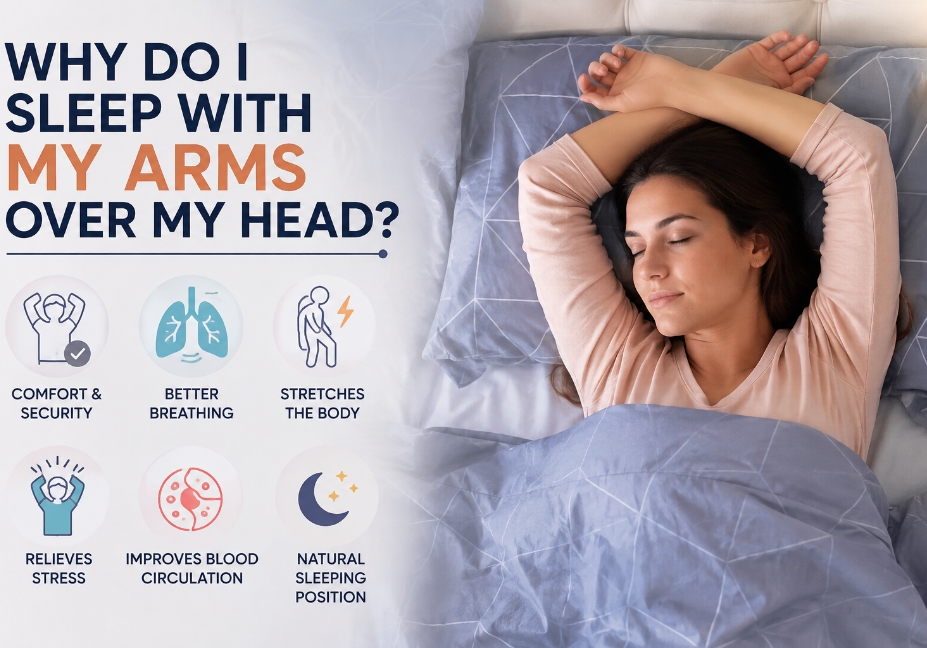
Why Do I Sleep With My Arms Over My Head?
Did you know? Some sleep researchers connect certain sleep positions to subconscious feelings of security. One theory suggests people tend to sleep on their non-dominant side specifically so their dominant hand stays free — arms raised overhead has been linked in a similar way to an unguarded, relaxed sense of safety, though this remains more theory than hard science.
Making Room for a Partner
If you share a bed, raising your arms overhead — consciously or not — can simply be a way of creating extra space for a partner to cuddle in close, tucking your arm up and out of the way rather than pinned underneath them.
A Passive Stretch for Tired Shoulders
Raising the arms overhead naturally stretches the shoulders, chest, and upper back. For people who spend their day hunched over a desk or phone. This position can offer a small, passive release of tension that’s built up from daytime posture. Part of why it can feel specifically comfortable after a long day of sitting.
It Can Be Your Body’s Way of Opening the Airway
This is the explanation worth paying closer attention to. Raising the arms lifts the ribcage slightly, which can help open the airway. And sleep experts note that some people shift into this position specifically because it makes breathing marginally easier. If you don’t usually fall asleep this way but keep waking up with your arms overhead. It can be worth considering whether something is mildly restricting your breathing overnight. Such as snoring or early signs of sleep apnoea.
Why Do I Sleep With My Arms Over My Head?
Expert note: A sleep science coach interviewed on this topic noted that sleeping on your back — which the arms-overhead position typically involves — is also more likely to contribute to snoring, since gravity allows the tongue and soft tissue to fall backward toward the airway.
The Downside: Nerve Compression
Sleeping with your arms raised for extended periods puts sustained pressure on the brachial plexus — the bundle of nerves that runs from the neck, under the collarbone, and down into the arm. Compression along this pathway, especially at the narrow space between the collarbone and first rib, can produce that familiar “dead arm” feeling: numbness, tingling, or a dull ache running from shoulder to fingertips.
This is usually harmless and resolves within seconds of lowering your arm. It’s worth paying attention to if:
- Numbness or tingling happens every morning, rather than occasionally
- The sensation takes more than a minute or two to resolve
- You notice loss of strength or persistent weakness in the arm or hand
Pro tip: People with existing rotator cuff issues or thoracic outlet syndrome (a condition involving compression of nerves or blood vessels near the collarbone) tend to be more sensitive to this position and may notice more pronounced symptoms.
When to Pay Closer Attention
Sleeping with your arms overhead is usually just a comfort preference with no downside. It’s worth mentioning to a doctor if you notice:
- Chronic shoulder, neck, or back pain that starts or worsens upon waking
- Frequent numbness or weakness in the arms or hands, especially if it lingers
- Signs of a sleep-related breathing issue — loud snoring, pauses in breathing noticed by a partner, or excessive daytime sleepiness
- A sudden, unexplained shift into this position after not sleeping this way before
What Can Help
- Adjust your bedding. A firmer pillow can help prevent your head from tilting too far back when your arms are raised. And a supportive mattress helps keep your spine aligned.
- Manage room temperature. If overheating seems to be the trigger, lighter blankets and breathable sleepwear can reduce the urge to raise your arms for cooling.
- Try a light, fitted sleeve or shirt. Some people find that a slightly snug long-sleeve top gently discourages the arms from drifting overhead without being restrictive.
- Talk to a doctor about persistent numbness. If tingling or weakness happens consistently. And it doesn’t resolve quickly; it’s worth ruling out nerve compression issues beyond simple sleep position.
Frequently Asked Questions
Is it bad to sleep with your arms above your head?
For most people, no — it’s simply a comfort preference. It becomes worth addressing if it’s paired with regular numbness, shoulder pain, or signs of a breathing issue like snoring or sleep apnoea.
Why do I wake up with my arms above my head if I didn’t fall asleep that way?
People shift positions many times throughout the night, so this is common and not unusual on its own. If it’s a consistent new pattern, it can sometimes reflect your body seeking easier breathing or a cooler position.
Can sleeping with arms overhead cause numbness?
Yes. The position can compress the brachial plexus nerve bundle, causing temporary numbness or tingling. This typically resolves quickly once you move your arm, but frequent or lingering numbness is worth mentioning to a doctor.
Does sleeping with arms up mean I have a breathing problem?
Not necessarily, but it can be a sign your body is trying to open the airway more. Particularly if you don’t usually sleep this way. Loud snoring or witnessed breathing pauses alongside this position are worth discussing with a doctor.
What does the “starfish” sleep position mean?
It’s simply a term for sleeping on your back with one or both arms raised near the head. It’s a relatively uncommon position, and while some connect it to personality or comfort-seeking. There’s no single definitive meaning behind it.
The Bottom Line
Sleeping with your arms overhead is, for most people, a harmless mix of temperature regulation, personal comfort, and simple habit. The main things worth watching for are lingering numbness. A sign of nerve compression — and a new pattern that might reflect your body working a little harder to breathe. If you wake up feeling rested and pain-free, there’s no need to fight your body’s favourite position.
This article is for informational purposes only and does not substitute for professional medical advice. If you have concerns about persistent numbness, shoulder pain, or sleep-related breathing issues, consult your doctor.